To Those Who Have Found Kokoro Note
If you have long felt that something was off in your family, or about why your own life feels so hard, and you are searching, somewhere inside the confusion, for where it actually comes from. If you are a support worker, looking for ways to close the gap between the professional literature and what happens on the ground. Or if, every time the news carries a heartbreaking abuse case, you find yourself asking why this keeps happening and whether there is anything you yourself could do — if that question has stayed with you about the issue of abuse. Kokoro Note is written for people like you.
About the Writer
I, the writer of Kokoro Note, have worked since 2019 as a support worker, primarily through an NPO that supports families in crisis.
The work brings me into contact with many different people.
Children who, by every sign, are being abused — along with their parents and grandparents.
Adults who survived abuse in childhood, including those who have since become parents themselves (mothers and fathers who carry their own histories of being abused).
Parents who have lost a child; children who cannot live with their parents; parents whose children have been taken from them.
Children and adults living with intellectual disabilities, from mild to severe.
People living with schizophrenia.
People with dependencies on alcohol, drugs, sex, or religion.
People living in homes overrun with trash; recurring trouble with neighbors.
It is a setting where police involvement, without warning, is not at all rare.
At the same time, I have worked alongside doctors and, in some cases, lawyers.
How limited the usefulness of assessments such as the WAIS really is.
How some doctors end up medicating abuse survivors into a numb state — while other doctors gently guide a survivor up, step by step, from the depths of despair.
How biased family court reasoning can be, and how unsatisfying its outcomes can feel.
I have stood beside all of these scenes.
What becomes visible in these settings is, frankly, quite far from the picture most people imagine when they hear the word “abuse.” The summary of an incident read out by a news anchor, the verdict read out by a judge, or the abuse scenes written by a screenwriter who grew up in an ordinary household — through such fragments alone, the actual texture of abuse cannot really be picked up. Before I stepped into the field myself, I, too, was on that “outside the field” side. Behind those limited fragments, there are, in reality, countless things that simply cannot be reached by reading or watching them alone.
The knowledge that gets passed down quietly — in the limited training programs for support workers, from senior to junior staff in the field — almost never leaves that small circle.
And yet the people who need this knowledge most are the survivors themselves, who go on living their days without ever quite finding the words for it. So are the people who have long sensed that “something is wrong” in their own family, or in the family of a partner, and the people whose hearts ache at every news story and who keep wanting to do something. This knowledge ought to reach them, too. The way this line has been drawn has been a quiet frustration of mine for a long time.
Another thing I have felt, again and again, from being on the ground, is just how long it takes for someone to reach the state of “at last, I am now standing at the starting line of recovery.” Ten years, twenty years, sometimes more. Some give out along the way. Looking back, there is, in fact, knowledge that — had it been within reach earlier — would have kept the road from becoming such a long detour. I have come to want, at the very least, to shorten that time even a little.
It is also the case that the sessions of a truly capable counselor or psychiatrist who can really help with recovery are not, frankly, affordable, and appointments are not easy to come by. It is not at all unusual for monthly costs to run from close to ten thousand yen up to several tens of thousands. Reaching a session that actually works is the better outcome; some forms of counseling do not heal at all but only deepen the burden. There are also cases where spiritual-style seminars promise “you will be saved if you take this” and end up charging extraordinary fees.
That is exactly why I have come to want to put, at the very least, the kind of map that becomes a starting point of recovery — the basic handles for understanding, as structure, “what has been happening to me” — somewhere within reach, for as little burden as possible.
As “someone who translates between survivors and specialists,” I lay what I have come to see in the field over the frameworks the clinical world has built up across decades. What comes into view from that overlay, I carry all the way to the hand of the person who needs it. That is why I write Kokoro Note.
What follows is a personal record of why I came to work in this field. It runs long — please read on only if you would like to.
The Day I Could Not Move in Front of the TV
“Please. Please. Please forgive me.”
— A five-year-old girl wrote that on her last letter to her mother, and she died.
On the day the news read those words aloud, my hands stopped in the middle of the housework and I could not move from in front of the TV. My young child clung to my leg with a worried face and looked up at me; only then did I notice that I was crying.
From that day on, a question would not leave me. It sat heavy on my heart.
— Why does a parent kill their own child? Why was no one able to stop a partner from killing their own child?
The Notebook That Crossed the Wall
I had probably gotten too used to incidents like this.
When the news read out words like “murder,” “death,” “suicide,” sometimes “starvation,” my heart would grow a little heavy and my hand would reach almost automatically for the remote, and the channel would change. That was a part of my own daily life. The reality of those words was so far from my own existence that even imagining it well was difficult.
It is a completely different genre, but for an analogy, what came to mind was labor and childbirth. Hearing the comparison “giving birth hurts like passing a watermelon through your nose,” before I had experienced it, the words simply slipped past my head and stopped somewhere short of “it must hurt a great deal.” When I actually went through it, there was a pain and a terror so far beyond what words could contain that no language could really catch it.
What it is like inside someone who is really suffering — without either having gone through it oneself, or having witnessed it firsthand on the ground — the single words “murder,” “death” cannot help but pass by as other people’s stories, and slip away.
— But the case of that little girl had one thing that was unlike any abuse case I had ever heard of.
Her notebook was left behind.
The words written there were so specific, so young, so urgent that — even though I had been only on the other side of the screen — for the first time, a piece of “a survivor’s suffering” slipped into me and would not leave my heart.
To consume an incident and forget it by the next day — that wall, her letter crossed.
A Face That Rose to Mind in the Treatment Room
It was only a few weeks after the little girl died. I was in the dentist’s treatment room, lying back in the reclining chair, waiting for the anesthesia to take effect. The brightness of the ceiling light, the smell of the chemicals, the sound of the machines somewhere behind me — I was bracing for the pain that was about to come, and that was all.
Suddenly, her face rose up in my mind. The face of the girl I had seen so many times in the news, the girl who was no longer alive.
And I thought:
— If a grown adult like me has my palms wet just from a dental treatment — then every single day, inside her own house, that little girl was bracing herself for the next fist coming down, again and again and again, inside that same kind of fear.
When the treatment was over and I returned to the parking lot and closed the car door, I could not bring myself to start the engine for a long time.
After that, in unrelated places, she would return without warning. The supermarket register, a red light, the school pickup, walking to the kitchen for water in the middle of the night. It is not that I want to forget. But I am not allowed to forget.
How to handle this feeling inside myself, I did not know — and looking for the answer to that very question may itself have been the first source of momentum.
A Certain Night
A little later, around the time my second child was born. It happened in the bath. I was washing my baby, the younger one, holding the small body in both arms. Right beside me, that day, was a bucket filled with cold water.
In the instant I reached out for the shampoo bottle, the small body in my arms slipped, and went straight down into the bucket of cold water.
— So this is what people mean when they say “time stops,” I thought.
The child’s eyes flew wide open; I heard the sound of breath being caught. I lifted the body back up almost by reflex, warmed it with hot water from the shower, and kept repeating, “I’m sorry, I’m sorry.” The child cried with a voice I had never heard before — almost a scream.
That night, after the children were asleep, I lay under my blanket unable to move.
It had been only a few seconds. I had not hit. I had not shouted. But it was entirely my own carelessness that had let the child fall into cold water. I knew, in my head, that it was an accident. Even so, the thought — that the sensation of cold water had now been carved into this small body — I could not, for a while, escape.
At the same time, this came to me: — in this world, there are houses where pouring cold water (or boiling water) onto a child is called “discipline” and repeated almost every day.
The same act, in one house, becomes an accident that keeps a parent awake all night; in another, it is the daily routine that happens again the next morning. What, exactly, makes that distance? That question has stayed with me for a long time.
“Just Bad Luck”?
The only thing in my life that I had ever experienced as “a pain words cannot really contain” was childbirth. I know this is not something I should compare. But I have no other experience in my own life that comes close to what the pain of abuse must be.
Through the physical pain and the extreme fear that came over me during labor, I learned for the first time that pain and terror on this scale actually exist in this world.
— And something on that scale is being poured, day after day, into children who should be loved, loved, loved.
After the incident, I heard words of comfort in many places. “She was probably sent as an angel, to change the world, to save other children.”
But I could not, in any way, accept that. Most likely, those are words that adults craft to settle their own hearts — adults who cannot face, head-on, the cruel death of a child by abuse. The children whose terrible deaths have moved politics were not born for a mission to save someone. They were born to be loved by their parents in an ordinary way, and to live their lives, in an ordinary way, in happiness.
If anything, what grew deeper inside me was the despair that there is, after all, no god.
“Are there such things as losing tickets in this life?” — this is a question that has repeated itself in my mind many times.
The time I have taken for granted — my youth, my working years, the time of having and raising children — and, in this very moment, the time of a child enduring hell in a room no one has noticed. Or the long, unimaginable time of someone who did not die, and so was never an “incident,” but has been unable to escape from hell for years, for decades.
To explain that difference away as “just bad luck” or “maybe in your next life you will have happy parents” — I could no longer do that.
A child in the middle of being abused will not ask for help. Locked inside the house, no one sees them. — Where, and how, must one search to reach that child? My own helplessness filled my chest with the weight of inadequacy.
I Could Not Just Stay Still
Until then, I had probably been looking at the word “abuse” from the outside, with a thick mosaic over it.
Watching the news, my chest would tighten, I would murmur “poor thing,” and by the next day I was back in everyday life. Without noticing, I was settling one round of it that way. When I think about it now, that was the very center of postponement and leaving things to others.
That little girl’s notebook did not allow me to keep standing in that same posture.
I happened to be raised in the love of my parents and the people around me. I happened to grow up safely into adulthood. And now I am standing in a place where, as an adult on the side of protecting children, I can move. — If that is so, then I want to try from the small things I can actually do. Even if I cannot tell how much effect it will have, even something tiny is more than doing nothing.
The first thing I did was to send one email to the legislator of my electoral district. “Until a few days ago, I would not have imagined myself doing such a thing” — even as I was writing, I was watching myself doing it, as if from outside.
A problem like child abuse only begins to move politically after public opinion moves. After her case, a signature campaign was led by public figures, the Diet moved, the law was changed. Even so, the more I looked into it, the more places came rising up inside me where neither writing nor email could reach.
— “Is this harder than breaking a window to go save her?”
If a time machine existed, and if I could return to a day when she was still alive — I would buy a bat, take a taxi to that apartment, confirm that the abusing parent was out, and break the window. That much, I think, I could have done. But that time will not come back.
The old me would have thought, “Taking paid leave to sit in on a ward assembly,” “writing a petition” — “what is the point of doing that, really?”
But because that little girl wrote down, “Tomorrow I will absolutely do it, I will do it,” I am able to move. I could not break the window for her. Yet “more tomorrow than today, do something more” — that one line, I keep within me.
To uproot child abuse, until the country fully moves, public attention must keep being held. As long as a politician’s engine is “votes,” our continuing to care is the strongest lever there is.
The “Why” Finally Came Into Focus
I knew from the start that the answer to that question would not be easy to reach.
“Why does a parent abuse their own child?”
The perpetrator’s history, expert commentary, the writings of analysts, quotes from court decisions — whenever any of these came into view, I read them one after another. There were enough plausible answers to fill a list. Poverty, stress, marital trouble, intergenerational cycles, isolation, addiction, postpartum depression. Each of them is, in one slice, correct. And yet none of them, taken alone, explained the something that lay underneath the cases I held in my head.
“In the end, people just can’t be understood” — I would land in that place, close the question, and reopen it again. And again.
Two turning points, however, came in quick succession.
The first was an encounter with a particular professional training program. A specialized, systematic curriculum in clinical work with abuse, organized around reading abuse “why and how it happens” from the survivor’s side. While keeping my job, I used my weekends to attend it for two years.
The second came a little after that, when I left the company.
Having been raised in an unremarkable home, hired into a company straight out of school, married, becoming a parent, going back to work — the “ordinary company worker” that I was. To move my life into the field of child welfare was, until then, an option I had never even considered.
“I decided” would not be quite accurate. It is more accurate to write that I came to a place where not deciding was no longer possible. “Until the day I understand,” staying in a safe place and only reading books — I could not endure that any longer.
After placing myself in the field of child welfare, through dialogue with survivors, through what others involved told me, through watching how things unfolded around them, time began to accumulate — time with a density of touching “reality” that was incomparable to anything before it.
— And then, at a certain point, the “framework of classification” that I had gained in the training program and the “countless raw cases” I had touched on the ground locked together in my head.
What had been one undifferentiated mass inside me, all mixed up, suddenly separated cleanly and rose up as distinct things.
What is called “abuse” is not a single phenomenon. — Depending on the characteristics of the parent, the cause, what is actually happening, what gets broken on the child’s side, what those around them can do to move the situation — several different phenomena, fundamentally distinct from one another, had all been crammed into the same single word.
For example: a parent of normal intelligence with their own history of being abused; a parent with mild intellectual disability or borderline intelligence; a parent with schizophrenia; a parent of normal intelligence whose psychological development was, for some reason, halted partway through. Even just these four are not the same. The motive, the way the parent-child relationship gets distorted, the kind of support that is needed — all of them are different things.
From the moment that distinction came into my hand, cases that had become muddled and stuck for everyone involved began to unravel, slowly.
What Kokoro Note Sets Out to Write
What I set out to write in Kokoro Note comes in three pieces.
First: translating clinical frameworks into the language of the field.
In the world of abuse clinical work, a body of organization has been built up over many decades. But it is sealed inside textbooks for support workers, and almost never reaches the hands of survivors themselves, or the families struggling right beside them. I take that framework and rewrite it, in Japanese that is as plain as I can make it. Rather than overwhelming the reader with a shower of technical terms, I plot one coordinate at a time: “what is happening in front of you right now sits at this point on the map.”
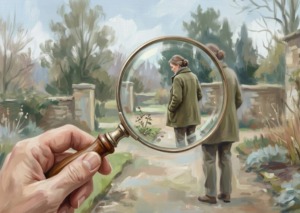
Second: from the cases met in the field, recording how a survivor’s inner life moves.
Cases in textbooks are too neat. The roughness of the actual field has been smoothed away. But in the families one meets on the ground, individual tremors that no textbook or paper can fully contain are arising, every day. On this site, I lay those down as grounded flesh on the bones of each article.
I never write in a way that makes any individual identifiable. While keeping the essence intact — what was happening in that household, how the inner life moved — I deliberately shift the setting, the attributes of the people, the wording of their lines, and weave the essences of several cases together. “Whose story this was” cannot be traced; only “what is happening” reaches the reader. That is how source material is handled on this site.
Third: from the perspective of institutions, economics, and social design, asking “where to change next, for it to actually move.”
The social cost of child abuse in Japan has been estimated at around 1.6 trillion yen per year. This is not a story of pity. It is a story of economics, and of social design. The Neuvola system in Finland, how special adoption operates, the structure of Child Guidance Centers, the international gap in foster care placement rates — rather than ending with “a heavy issue, isn’t it” and walking away, I write about which lever, pulled how far, moves what, in the grammar of numbers and institutions.

Thank you for reading this far. For those coming to Kokoro Note for the first time, if you are to pick up just one piece to start with, these are the ones I would recommend.