※ Before reading this article, please make sure to read [Required Reading] Things to Know Before Reading This Site.
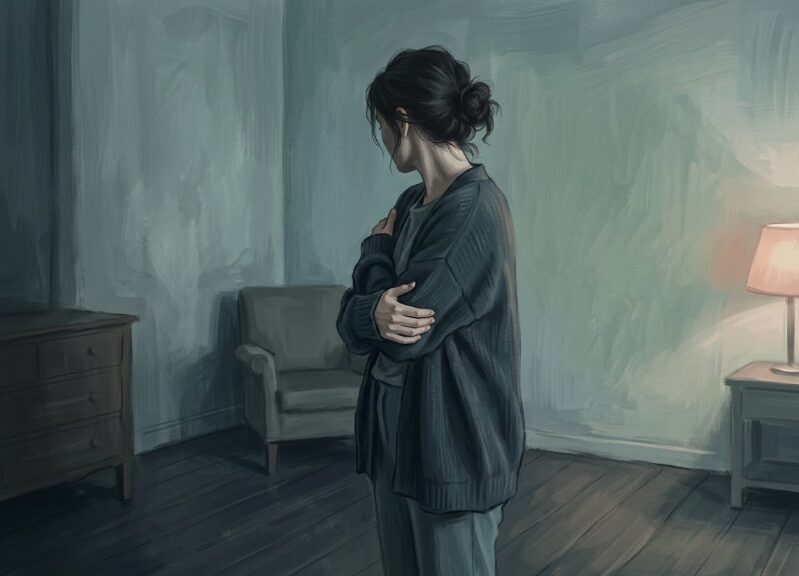
In a quiet, sparsely furnished 1LDK apartment in Tokyo, Yuko (a pseudonym, 38) lives alone. The afternoon light through the window falls on dust-free flooring.
Her marriage with the husband she divorced eight years ago should have looked, from the outside, like “a happy marriage” — a calm man at a good company, a stable life, a future on solid ground. Yet that beautiful little garden of a life collapsed, audibly, on a single decisive “absence.”
Yuko’s outright rejection of “children” as a concept.
Chapter 1: An Unknown “Foreign Body”
“Children are precious.” This is treated as one of the world’s truths, an unquestionable “light.” In commercials, dramas, and social media, a child’s smile is consumed as a symbol of innocence and happiness. For Yuko, that “light” was something else — a glare so strong it would burn her eyes if she looked at it directly, the kind of brightness that made her skin prickle.
Whenever she crossed paths with a stroller on her day off, whenever she saw a child running around in a food court, what rose in her chest was not warmth but a wave of revulsion she had to look away from. The unpredictable shrieks, the weight of small hands grabbing nearby adults, the unfiltered demands — all of it registered as something hostile.
Chapter 2: A Broken “Contract”
Before they married, Yuko and the man who would become her husband had made an agreement that almost felt like a contract: “I am not planning to have children. I want to keep my career, and I want a quiet life, just the two of us.”
At the time, her husband — two years older — accepted that condition with, “Got it. As long as I have you, I’m fine.” Those words were exactly why Yuko decided to marry him. With this person, she might be able to live without performing “the normal woman.” He might stay beside her with her gap intact, instead of trying to fill it. That was the faint, urgent hope she carried in.
Three years into the marriage, when Yuko was twenty-seven, that hope was broken. “Should we maybe start thinking about kids?” One evening after dinner, in the living room, he said it as if mentioning the weather. The TV laugh-track sounded suddenly very far away. Yuko’s spine froze.
“That wasn’t the deal. We agreed not to have kids…” Her voice trembled as she pushed back. He gave her a slightly troubled smile, with no trace of guilt.
“That was when we were younger. You’re at the age now, and all my coworkers are becoming dads. Anyway, you’ll change once you actually have one. Your own kid is always cute.”
His words were a violence with no malice in them. “You’ll change once you have one.” “Your own kid is always cute.” That groundless optimism was the most terrifying part for Yuko. What if she did have a child, and still could not feel love? What if the revulsion did not go away? In that case, who would carry the responsibility for that life?
Ah, she thought. He had filed her away as just a touch of youthful indecision. The desperate confession of “I’m afraid of children” had been processed by him as a temporary tantrum. He could not see it. The depth of the dark Yuko was carrying.
Chapter 3: “Parasitism”
The pressure from her husband mounted by the day. It was not only direct words. On weekend trips to a shopping mall, his glances toward “look at that one, isn’t she cute?” Or the unspoken pressure from his mother — “still no grandchildren?” — that he made no effort to deflect.
Every night, watching his sleeping back beside her in bed, Yuko asked herself the same question. According to society at large, it was natural to “want a child with the person you love.” So — did that mean she didn’t actually love her husband?
Honestly, Yuko didn’t really know what “love” was. She didn’t dislike her husband. Being with him was reassuring, and she was grateful. But asked whether that was “love,” she could only tilt her head. She had chosen him because he was calm, didn’t raise his voice, and would keep their life stable — because he was a “safe person.” It wasn’t that there had been some passionate something. It was that she had wanted a shelter — a place where she would not be attacked, would not be hungry — and she had asked him to be that shelter.
I didn’t marry my husband because I love him. I was afraid of living alone, and I chose him as the host I could attach to. Once Yuko’s cool self-analysis arrived at that line, an enormous guilt hit her. Her husband, dreaming of “the normal happy life” with a child. Her own “defect” was eating that dream alive.
Chapter 4: “Normal” as a Weapon
“I’m sorry. But I can’t. There isn’t a single millimeter inside me that could become a mother.” One night, Yuko said this through tears. Her husband’s confusion shaded into irritation.
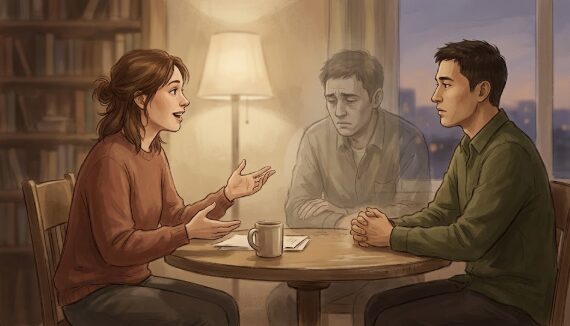
“Why? Doesn’t everyone want one, normally? Just look around. You’re overthinking this.”
The word “normal” became a knife edge cutting Yuko apart. Normal. Normal. Normal. That word was the same blade that had been pressed against her throat since she was a child. To play “the normal family.” To be “the normal daughter.” Forced to keep performing it, hurt every time she failed — that was Yuko’s history.
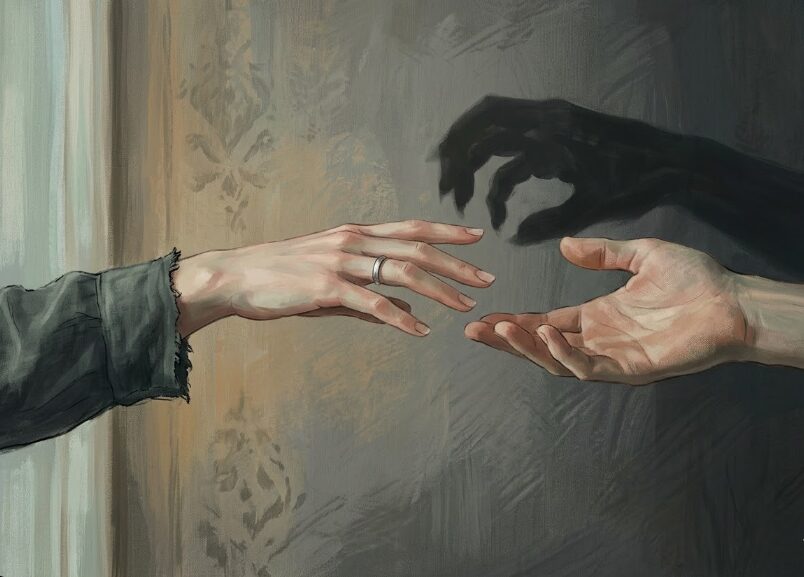
The gap between them never closed. The “warm family” her husband wanted, and the “silence and safety” Yuko wanted, were fundamentally incompatible.
The day she stamped the divorce papers, what came out of her was not grief but a deep sigh of relief. Now, finally, she would not have to live up to expectation. Released from the work of pretending to be “normal” while hiding the missing piece inside.
Chapter 5: The Curse
Why do I reject children this severely? Why can I not picture a future with the person I love?
Yuko had a childhood she had wanted to seal away. The reason she registered children as “foreign bodies” was that she herself had once been nothing more than “a useful tool” for her own mother — a memory etched in like a curse.
One counselor put it this way: “A child who learned at an early age that ‘I am a tool’ has not just failed to see relationships made of love — they don’t even know what such a relationship is.” The experience of being treated as a tool, accumulated over years, settles by around age ten as the template for “this is what a relationship is.” Yuko’s reading of her own child as a “foreign body” is not a refusal to love — it is the absence of any model of love in her body to begin with. This “not knowing” cannot be filled in by willpower or character. Realizing that is the entrance to recovery.
Yuko’s sense that “the frequency of happiness simply doesn’t reach me” is connected to the foundation of “safety” she never received in growing up. The structure of why a person cannot trust people is unpacked in the article below.
Comments