Why can Yuko not picture a future, free of dread, with the person she loves?
The answer sat inside the black box she had spent years trying to seal: her own childhood.
She registers children as “foreign bodies” because, to her own mother, she had never been a “beloved daughter.” The memory of having been only a useful tool — sandbag and emotional dumping ground at once — was burned into her mind like a curse.
Chapter 1: The Tragic Heroine
In the sealed room of the home, Yuko’s mother always played the role of “the tragic heroine.”
“The wife next door eats out five times a week, and what about me — cooking, laundry, day after day. Like a maid.”
Night after night, the same passive-aggressive griping. The dinner table held a small repertoire of dishes that seemed to embody her boiled-over irritation — overly salted, overly resentful.
Watching her mother’s demonic expression, Yuko would think, “I’m the reason Mom is suffering. If you hate it that much, you don’t have to cook…” — but she could never voice it. Saying it would only summon a far worse storm.
Chapter 2: A Self-Esteem Demolished
One day in middle school, Yuko’s mother found out she had bought a mechanical pencil. Just that — bought without telling her — sent her into a rage.
“Hiding things from your parent! Whose money do you think you live on?”
In front of Yuko, she took the pencil and snapped it in two with both hands.
Snap.
The dry sound of plastic shattering overlapped with the sound of something breaking inside Yuko.
“Must be nice, having money,” her mother sneered, and the next month her father’s allowance was cut.
Wanting anything is a sin. Feeling happy will put my mother in a foul mood.
That was the moment the lesson took. From that day, Yuko learned how to switch her own emotion off.
Chapter 3: Success as “Betrayal of the Parent”
“Maybe this time she’ll praise me.”
Even a mother who only ever criticized might recognize a public award. Carrying a certificate home, that small hope flickered. What waited for her at the door was something else entirely.
Her mother screamed as if she herself were the victim. “You children are completely without gratitude!”
In that moment, Yuko understood. This person is not “someone you can have a conversation with.” Words seem to land, but no meaning sticks.
Inside her mother’s head, there were only two circuits: pleasant and unpleasant. Her daughter’s success was, to her, the worst kind of unpleasant — “I have been knocked off the leading role.”
Chapter 4: Escape, and the Recognition of the “Missing Piece”
Outside the home too, Yuko’s mother kept making “tone-deaf” remarks at family gatherings and getting quietly avoided by relatives.
When an uncle gently called her on it, she sulked: “they don’t get my sense of humor.” On the way home she would distort the events outright and force Yuko to listen to a long monologue: “I’m not the one in the wrong. They all ganged up on me.”
This house is hell. If I stay here, I will not be able to remain myself.
The only future I could see was being consumed as my mother’s sandbag until I was a husk.
Yuko decided to leave home the day she finished middle school. Predictably, her mother resisted hysterically. Yuko countered with the excessively convenient deal: “I will not ask for any allowance, I will not ask for any tuition.” Her mother still hurled “ungrateful daughter” at her. Yuko shut her ears.
Live-in newspaper delivery. Up at three in the morning, deliveries, school, more deliveries. Her body protested, but it was still better than being inside that house.
Family is a prison. Blood ties are chains. That was Yuko’s hard-earned, blood-stained “definition of family.”
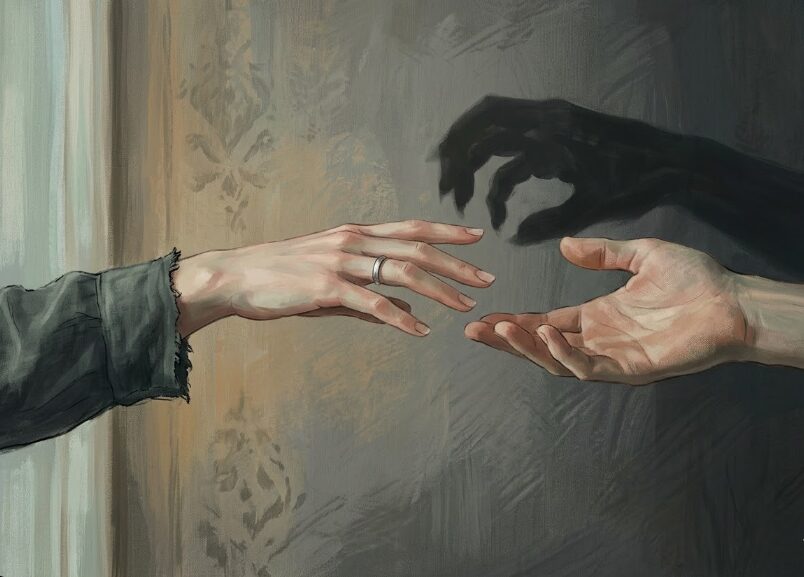
That is exactly why children frighten her. If she had a child, what would happen? Would she dump emotions onto the smaller person, control them, exploit them — like her mother? Would the “blood of the mother” flowing in her at some point break loose?
Or — if she tried to love a child — would she destroy it because she didn’t know how to love? That fear sits in her not as logic but as instinct.
Chapter 5: A Solo Right Answer
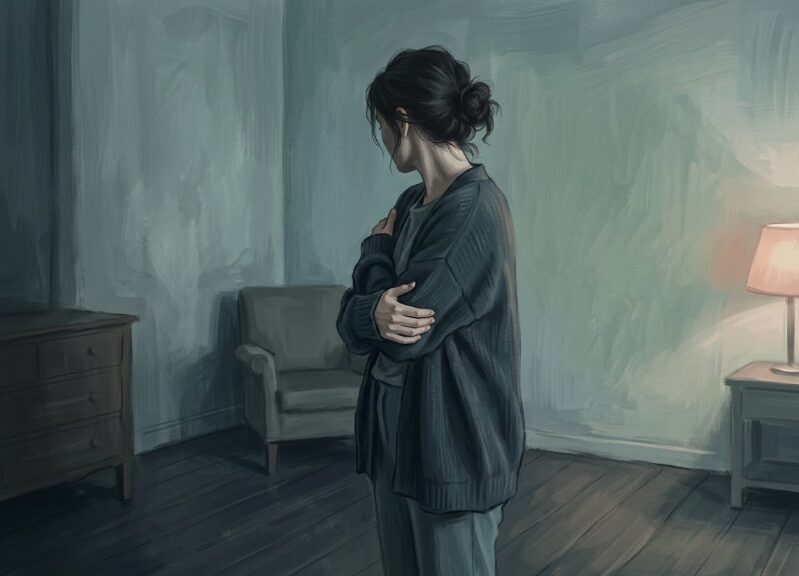
Yuko chose, in the end, to be alone. Not as a failure to find someone, but as a deliberate decision: do not put another person, especially not a child, into the orbit of what she carries.
Society offers a single dominant template — partner, marriage, children, family — and treats anything off it as a deficiency. Yuko’s “missing piece” is real, but the conclusion she reached is not failure. It is a careful, considered protection of the next person who would have been hurt.
The dust-free 1LDK in Tokyo, the silent afternoon light: she has earned them. They are a victory she should not be asked to apologize for.
Comments