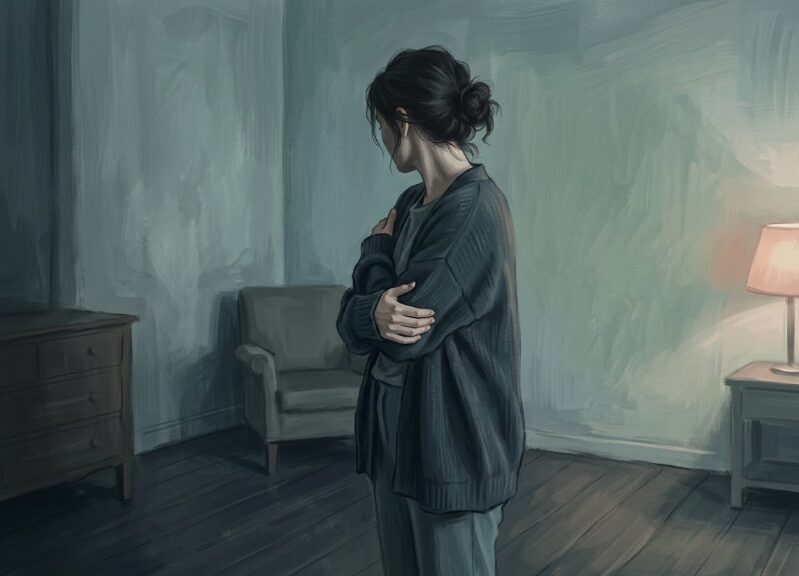
Mai (a pseudonym), now nineteen, lives by herself in a quiet apartment.
Her family, on paper, is her mother and a younger sister two years her junior. There are also, apparently, two more half-siblings by different fathers, but Mai has never met them.
Saying that “the three of them live together” is true only on the family register. Her sister is rarely home for even half the week. As for her mother, calling her a “co-resident” feels like a stretch — she only shows up a handful of days each month.
The mother drifting away and drifting back had been daily life for Mai for as long as she could remember. She only learned that this was not “normal” after she was taken into protective care.
Chapter 1 — Darkness, and the Taste of Ketchup
Mai’s earliest memories are dim. This is not a metaphor; the dimness is literal. Having the electricity cut off for unpaid bills was a regular occurrence in her household.
A room with the curtains drawn shut, or the stifling inside of a car as she waited for her mother to come home. For young Mai and her sister, that was the entire world.
“I’m hungry.”
Mai had grown tired of hearing her sister’s tearful whimper. The refrigerator was either empty or smelled of something rotting. The two of them would scavenge through the apartment, looking for “fuel” to stay alive.
A half-eaten sweet bun, a stale snack, microwave curry past its expiration date. And, dried hard on top of the kitchen counter, ketchup. Mai would put her finger to it and lick. It was sweet, slightly sour, faintly tomato-flavored.
That was the “taste of childhood” for Mai.
After several days, sometimes after weeks, the mother would come back. When she did, she always carried convenience-store bags in both hands. Rice balls, sweet buns, instant noodles. That was the full extent of her mother’s “way of showing love.”
Chapter 2 — The Sister as a “Rival”
“Mom!”
She wanted to run over and hug her. She wanted to talk for hours. But Mai never did.
If she clung too much, her mother would just leave again. To keep from being abandoned, she had to stay a “good child” who never caused trouble. The instinct to survive, learned young, kept her emotions on a short leash.
Her younger sister, two years younger, was different. The sister followed her instincts: clinging, crying, fighting to monopolize her mother’s lap. What rose up in Mai’s chest watching her sister was not affection; it was a thick, dark resentment.
“Stop it. You’re bothering Mom.” “Mom gets tired because you make so much noise.”
The frustration of watching her sister eat through their mother’s limited capacity. Two children fighting over the last of the food and the last of the mother’s attention — a rivalry forged at the edge of survival. After their mother left the house again, Mai would sometimes give her sister slightly less to eat. It may not have been spite so much as a quiet sentence passed on the sister who had displeased their mother.
Chapter 3 — Men as a “Lifeline”
Before long, the lights in the apartment would come back on. That was the signal that “Mom is bringing home a new man.”
The day before, the mother always came home early and frantically started cleaning the apartment, which had become a garbage heap. “Hey, help me out! We have a guest coming!”
Bagging trash on her mother’s instructions. Mai loved this time. She and her mother were doing something together. She was being useful to her mother. That sense, on its own, kept her self-worth alive.
On the days a new “uncle” came, supermarket deli food and pizza appeared on the table. The uncle was kind, and the long-awaited proper meal was so good it brought tears. In front of him, the mother smiled and was openly affectionate to Mai and her sister.
Ah — when an uncle is here, we get to eat.
But that happy stretch never lasted long. Soon enough, the mother would start spending all her time at the man’s place, and the standard pattern would begin again: the apartment empty for days.
“It’s because Mr. So-and-so gives me money that you have electricity, that I can buy you food. You should be grateful to him.” The mother said it with a straight face. There was no trace of guilt in her voice.
Young Mai took the words at face value. Mom is out there, working hard, just to feed us. If she doesn’t find a man, we’ll die. That’s what she’s fighting for, out there.
Her mother’s absence was not neglect. It was a “trip out for work.” All Mai and her sister had to do was be good and wait. Telling herself this was how Mai protected herself from the despair of having been “thrown away.”
Chapter 4 — Protective Care, and Meeting the “Objective Facts”
The breaking point came just before Mai was due to start elementary school. The mother did not show up at the school’s orientation, and could not be reached. The school and the child welfare office, finding this strange, finally took action.
When the mother was out, the adults came into the apartment. “Oh god…” someone let out under their breath. The inside of the home was overflowing with months’ worth of garbage and stench, accumulated since the mother had stopped cleaning.
More than that, the sisters’ bodies had reached their limit. Their weight was far below the average for their age; they were malnourished. Immediate protective care.
When the moment came to be separated from her mother, the sister cried out, but Mai herself was strangely calm. No one had hit her. Her mother had simply not been there. So why, she wondered, did this count as needing “protection?”
Life at the children’s home was, from the start, a series of shocks. Meals that came at fixed times. A warm bath. A clean futon. “So food was actually this good.” Wrapped in a blanket inside an air-conditioned room, Mai let out a quiet sigh of relief, somewhere inside herself. I don’t have to walk to the kitchen for water in the middle of the night anymore.
Some years later, when she was leaving the home, she had the chance to see a photograph of herself from the day she had been taken in. The girl in the photograph looked so painfully thin that Mai could not recognize herself. Hollow cheeks, sunken eyes, limbs like dry twigs.
“Wow — I really did survive…” Mai laughed softly to herself, a wry, half-amused laugh. There must have been neighbors. Why had no one noticed how strange the situation looked? Or maybe it was natural that no one had — the person at the center of it, Mai herself, did not, even slightly, think of herself as unhappy.
Chapter 5 — The Curse of “I Cannot Resent Her”
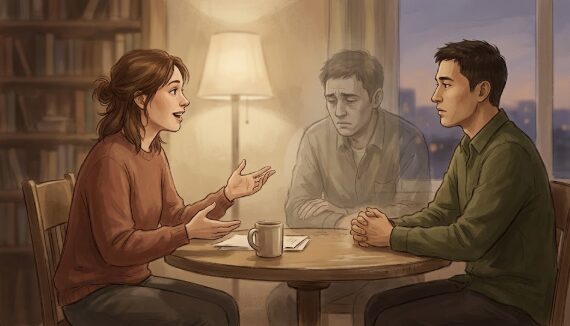
The staff at the home, and the counselors, told Mai things like, “Your mother did terrible things to you.” “Neglect is abuse. It’s all right to be angry.”
But those words, somehow, did not land for Mai. The other children at the home had been beaten by their parents, or verbally abused. Compared with that, she had not been hit.
Her mother had simply not been good at making meals. She had not been able to cook, had not been able to clean, had needed a man to survive — that was all.
“I don’t resent my mother.”
When Mai said this, the adults’ faces would take on a look that said, “the brainwashing hasn’t lifted yet.”
Her mother had not left them out of malice. Her mother had been almost like a child. “To feed your children, you have no choice but to get money from a man.” “I don’t know how to clean, so I leave it as it is.” Her mother’s actions ran on the moment-to-moment pleasure-pain calculus of a small child, and on a short-circuited survival instinct. A child in a grown body.
What was missing was even the higher-order “intent to neglect.” Mai and her sister had simply been kept, like pets, by this oversized child. If a pet starves through its owner’s incompetence, can the pet resent the owner? Or can the pet only accept, “I just got unlucky”?
Chapter 6 — Affirmation as Survival
“I don’t resent her.” Telling herself that, again and again, was the strongest defensive instinct Mai built in order to live through her childhood.
If she had ever admitted, “My mother left me alone because she does not love me,” her sense of self would have collapsed. Inside the hunger and the loneliness, the only hope she had was the story “Mom is doing her best for me.” It was fiction.
Only by holding on to that story could she bear the fear of the dark. So even now, she cannot resent. To resent would be to deny the version of herself that had been fighting so hard, day after day.
By defining her mother as “a person who simply lacked the ability — a pitiful person,” and standing in the position of “the one who has to understand her,” Mai is, just barely, holding her self-worth in place.
“My mother needed men, needed somebody’s help — she was a fragile person. So it couldn’t be helped.”
Mai, at nineteen, says this in an even voice. In the back of her eyes, there is a quiet light — neither resignation nor wisdom exactly, but something between them.
She has not forgiven her mother. She is, instead, accepting her mother’s existence as something separated from herself, like a “natural disaster” — a way of moving her own life forward.
Not resenting her. That was the sad, clear-eyed “survival strategy” Mai chose, to protect her own heart.
“I Cannot Forgive” Is Not Weakness
Mai’s case shines a light on a question that runs much wider.
“I don’t resent my parent.” “I’ve already forgiven them.” When a person who grew up with abuse keeps repeating phrases like these, it is worth pausing to think about what is actually behind those words.
In the field of support work, “forgiving the parent” is sometimes treated as the goal of recovery. Even in counseling, phrases like “let it go,” or “forgiving will set you free,” are used. But that advice is, often, a heavy burden for the person on the receiving end of it.
Does the self that hasn’t yet been able to forgive still count as “not recovered”? That is what such advice can make a person think.
A person who is suffering with the feeling, “I cannot forgive my parent,” is not a weak person. They are someone who has been forgiving, and forgiving, and forgiving, until they have finally reached the limit. It is not that they cannot forgive because they are weak. It is that they have forgiven too much, for too long, and the limit has been reached.
When Mai kept saying, “I don’t resent her,” it may not have been because there was no resentment to feel. It may have been that she could not allow herself to feel it. “Even a parent like this, you have to love.” “Resenting your parent is wrong as a human being.” Beliefs like these can keep a lid on the real feelings underneath, year after year.
The feeling, “I cannot forgive,” is not a feeling that needs to be erased. It is, instead, the evidence that the person has finally begun to recognize what was done to them as “something that was wrong.” There is no need to rush to let go of that feeling.
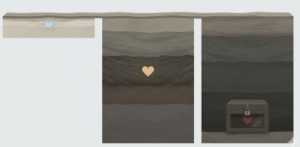
When Mai kept saying, “I don’t resent her,” where did the sealed-off feelings actually go? Emotional suppression has depths. The next article walks through what kinds of feelings get buried, and how deep they get buried, depending on the environment a person grew up in.





Comments