“I want them to admit what they did, and apologize.”
“I want to know why they did it.”
“Surely my parent will change one day.”
For a survivor of abuse, holding wishes like these toward an abusive parent is entirely natural.
Given the cruelty of what was done, an apology cannot simply wash anything away — but even one sentence of true apology can carry enormous meaning for a survivor.
Unfortunately, you would do well to assume that day is not coming.
What comes back when you ask, “Why did you do that?”
When a survivor, now an adult, asks the parent why they did what they did, what tends to come back is:
- “I don’t remember.”
- “I never did that.”
- “Stop digging up the past.”
- “That was your fault.”
- “You’re still hung up on something that small? Treating your own parent like the villain — you’re the worse one here.”
The wound gets cut deeper. Or what comes back is the kind of formal, hollow apology a survivor cannot accept on any level.
The wish to ask the parent directly, now as an adult, is natural — and that act of seeking confirmation can itself be an important part of the process.
So this is not “don’t try.” It is to know what to expect — so that, when you face the abusive parent, you are not pulled back under, and so that you do not spend the rest of your life serving a parent in the belief that “the day” is finally about to come.
Why we keep waiting even when we know it won’t come
“That day is not coming” — many survivors know this with their head and still cannot stop waiting. Why?
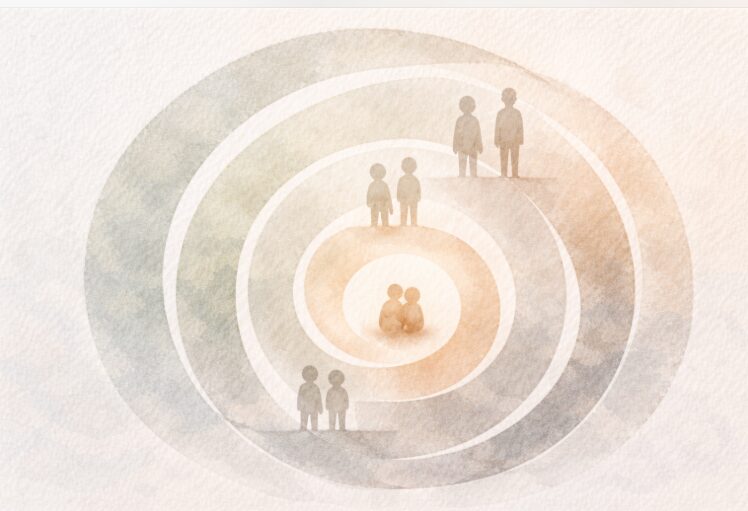
A child raised in an abusive environment, in order to survive, takes on a certain “shape of living.”
The “shape” learned in order to survive an abusive environment
It was a rational choice for keeping a life going inside a dangerous environment.
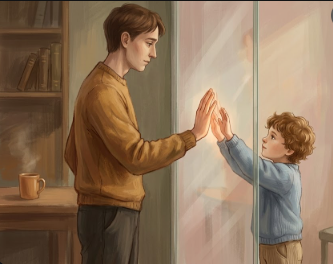
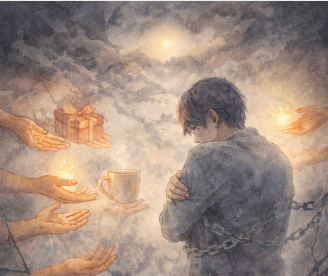
The trouble is that the shape stays put even after the environment changes. “I am still waiting” means “things with my parent are not yet finished.” For someone who survived a place where leaving the parent meant putting one’s life at stake, “letting go of expectation toward the parent” is not simple resignation — it can shake the very foundation of one’s existence.
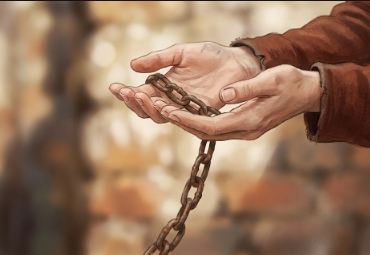
One clinician points out that the belief “I must not resent my parent” can itself become a tool of the abusive parent’s control. The moment an argument starts to go badly for them, the parent flips the survivor into “the bad one,” and the survivor lands again in the confusion of “is it me, after all, who is in the wrong?”
As long as that confusion does not break, “having the other person acknowledge it” — i.e., apologize — looks like the only path out. And so the survivor stays bound to the act of waiting.
To stop waiting is, at the same time, to step out of that loop.
When the parent has intellectual disability or borderline intelligence, “that day” almost never comes
If a survivor themselves has gone on to abuse their own child, working on the parent’s own inner wounds can produce “that day.” But when the abusive parent has mild intellectual disability or borderline intelligence, “that day” almost never arrives.
The recognition of “I abused” is barely there to begin with. The motives were mostly venting parenting stress or asserting their own ego. Most of what they did fades from memory with time, and even what is still there cannot be reframed as “that was abuse,” because the cognitive ability to do so has not developed. They cannot stand at the entrance to an apology.



Comments