The phrase “survivor-mother,” as used here, refers to a woman who grew up with abuse or inadequate care in childhood and is now raising children of her own.
This blog calls these women “survivor-mothers” — not as a negative label, but as a working term for looking, from a support worker’s perspective, at how the experience of being raised in abuse continues to shape a person now living as a mother.
A survivor-mother is not “a mother who becomes an abuser.” As the research consistently shows, the overwhelming majority of mothers with histories of abuse do not repeat what was done to them. If anything, they fear hurting their child more than anyone else does. What they carry instead is a quieter set of internal conflicts that build up across the days of parenting. This article tries to lay out what those conflicts actually look like, and how a support worker can read them.
More Likely to Hurt Themselves Than to Hurt the Child
The child takes for granted things the mother herself never experienced, never received — and that simple fact can stir up complicated feelings in a survivor-mother. When her child climbs into her lap with no hesitation, when she watches her child fall asleep without fear, the gap with her own childhood comes into view. Emotions move that don’t quite have words.
This is not malice toward the child. It is the grief of what she could never have, surfacing in the shape of something close to envy.
“Once you become a parent, you understand how hard parenting is” — that is the standard line. And once you do become a parent, you do understand: the sleepless nights, the parenting that never goes the way you planned, the exhaustion that has no bottom.
But at the same time, another question rises. “Even so — how could that parent of mine do what they did to me?” The more she learns how hard parenting actually is, the less her own past makes sense.
What it means to love, what a mother is supposed to give a child — she learns these for the first time through her own child. And every time she learns one of them, the outline of what she herself was never given grows sharper.
As a child, there was sometimes someone outside the home who showed her kindness. A neighbor, a friend’s parent, a homeroom teacher — someone who, perhaps sensing how she was treated at home, simply treated her gently.
Inside that warmth, something happy stirred in her. But every time she came home, the parent crushed it.
Freezing When the Child Reaches for Connection
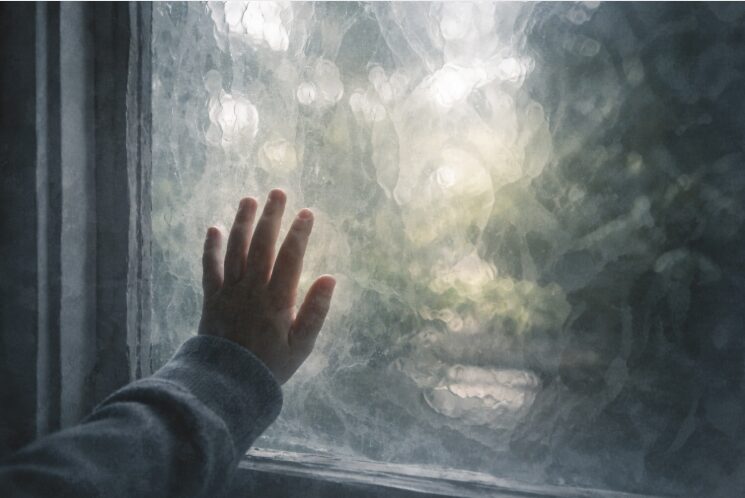
Many survivor-mothers feel a strong tension around physical contact with their child. When the child asks to be held, when the child clings to her crying — her body locks up. In her head she is thinking “I want to hold you,” but her arms will not move.
This is not the absence of maternal feeling. It is the memory, lodged in her body, of having her own bids for closeness rejected as a child. When you reach out and are ignored, or worse, hit for reaching out — that experience, repeated, gets etched into the body itself, until “asking for closeness” registers as a danger signal.
When her child reaches for connection with her whole body, two things happen inside the survivor-mother at once. The mother in her wants to meet that need. And the defensive reflex laid down in her own childhood — “being asked for love is itself frightening” — goes off at the same time. The two collide, and the body freezes.
The result can look like something close to psychological neglect. But the cause is not a wish to hurt the child. It is the older defense inside her, frightened of receiving the child’s love.
When “Don’t Form Bonds” Becomes a Way of Living — and Comes Into the Mother–Child Relationship
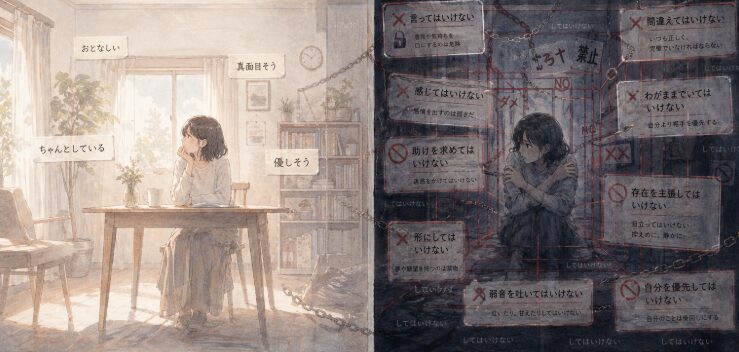
Most survivor-mothers, somewhere in childhood, arrived at a single conclusion: “If you open your heart to anyone, you only get betrayed.” This is not a thought. It is a survival strategy reached by experience.
You ask for affection and you get pushed away. You expect something and you get betrayed. So if you don’t expect anything in the first place, you don’t get hurt. That is the logic by which “don’t form bonds” became the way of life that protected the survivor-mother as a child.
The trouble is that this same way of life is then carried, intact, into the mother–child relationship.
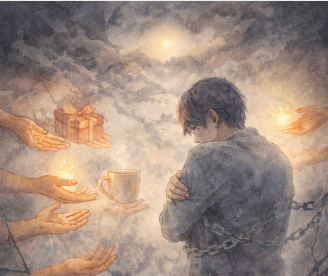
From the moment a baby is born, the baby reaches for a bond with the mother with everything they have. Crying. Clinging. Searching for her eyes. Smiling up at her. This is instinct in service of survival, the purest message in the world: “I trust you.”
But for a survivor-mother, that whole-body request can summon fear. “If I am asked for love this directly, and I cannot answer it, I will break.” This is not a conscious thought. It is a response that fires automatically, deep in the body.
And so, without meaning to, the survivor-mother quietly creates distance with her own child. The held moments get shorter. The eye contact becomes less frequent. The voice flattens out. She does not want any of this. The body has put on its own brake.
So how does this distance look from the outside? And how should a support worker actually read this scene? From here, this article walks through the structure of misunderstanding that occurs, again and again, in real support settings.




Comments