This spring, Saki (a pseudonym, 22) takes her first step into adult working life. She lives at home with her mother.
Her father lived with them when she was small, but heavy workloads and an overseas posting have meant that for the past six years he has barely come home.
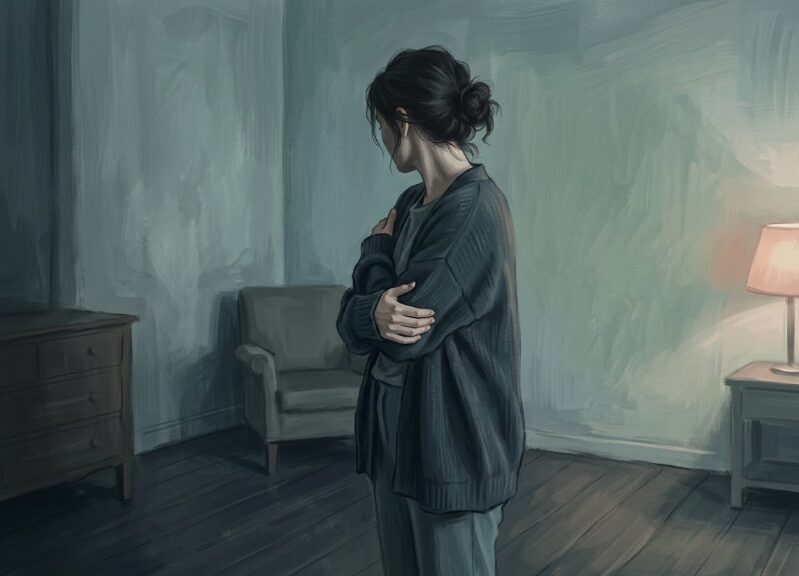
For Saki, an only child, “home” has meant a sealed-off country of just two people: her mother and herself.
To outside eyes they probably look like a close mother and daughter. They shop together, choose clothes together, “discuss” career choices. Except this is not “discussion.” Inside this house, the absolute monarch is the mother, and everything is dictated.
Chapter 1: Choices, Annexed
As far back as Saki can remember, she has never once chosen anything by her own will. The toy she would play with today, the color of the clothes she would wear, her favorite foods, her friends, her lessons. Every choice that should have flavored a life had been pre-filtered by her mother and handed to her ready-made.
“Saki, dolls are boring. Pick drawing instead.”
“Saki, not those clothes today — these. They suit you so much better.”
Each instruction landed gently, dressed up as concern. The unspoken contract: “You don’t actually have any judgment of your own. Mom will arrange it for you.”
Chapter 2: Success Was the Mother’s “Achievement,” Failure Was the Daughter’s “Sin”
Her mother decided Saki would attend a private middle school. Daily study schedule, choice of cram school, restrictions on time with friends — all of it managed.
If a test score came back low: “Look at how much I do for you — why don’t you respond to that?” Saki believed she was the defective one, the one making her mother suffer.
And when the acceptance came through, her mother’s joy was abnormal. She called every neighbor and relative, broadcasting it as if it were her own achievement. “Oh, well, all this child has going for her is studying! But the entrance exams really nearly killed me!”
That summer, at the neighborhood festival, the decisive moment arrived.
The men of the neighborhood association said, “Saki, congrats on getting into S middle school. Quite something.” Her mother launched into the same story of her own labors. “I sat with her every day.” “Making the lunches was so much.”
An older woman from down the block cut in: “Sure, but whatever the parents do, it was Saki who actually did the work. Plenty of kids fall short even when their parents push themselves to the bone. That’s all you, Saki. Good for you.”
The other adults nodded. “Yeah, you’re right.” “That’s Saki’s own doing.” The praise shifted, in real time, from the mother to Saki.
And in that moment, Saki saw it. The color drained from her mother’s face, replaced by a demonic expression. (Bad, this is bad. What do I do…) She was being praised, and not a word of it was reaching her brain. Her heart pounded; cold sweat ran. (Please, stop praising me! Look at her instead!) Inside her head she was screaming.
Chapter 3: A First Love, Stolen
In college, Saki had her first boyfriend. A sincere, kind classmate she met through a club. When he confessed, the first thing through her head was not “I’m happy” but “How do I explain this to Mom?”
Her mother regularly checked her diary and her phone, so the relationship was discovered at once. “Hiding a man from your own mother — what a tawdry girl you are!” Eyes of contempt. The look you give something dirty.
“I’m sorry, he asked me out and I couldn’t say no.” Saki apologized desperately. Her mother said, coolly, “One person asking you out is not evidence that you have any actual appeal. Back when I was young…” — and launched into the autobiography of her own male admirers. Saki’s self-esteem was ground into powder.
The day of a planned café date, her mother announced she would be coming along. Refusal was not an option. When her mother appeared, Saki froze. As if she were the one going on the date — a striking dress, careful makeup, perfume so strong it filled the air.
The instant they met him at the café, the mother went from “demon” to “saintly woman.” “Pleased to meet you. I’m Saki’s mother. Thank you for being so good to my daughter.” A poised smile, perfect comportment. In front of him, the mother became another person and took the conversation in hand.
That night, she said: “Did you notice? He was looking at me, not you, the whole time.” A triumphant face. Even with her own daughter’s boyfriend, she was competing as “a woman” — and savoring the victory. Saki felt physically sick.
Chapter 4: The “Extraction” Continues Into Working Life
From the part-time work she did in college, every paycheck went, on arrival, into her mother’s hand. What stayed in Saki’s wallet was the two-man-yen her mother called “an allowance.”
“As long as I leave it to Mom, it’s fine.” That is what Saki thought. Tried to think. She believed that handing her career, her relationships, and her money over to her mother was “the right way to live.”
One counselor puts it this way: “Telling someone raised under intrusive over-control to ‘think for yourself’ is like telling a fish that grew up in water to ‘breathe air.'” Saki’s outsourcing of all thought to her mother is not dependence and not weakness of will. In an environment where thinking is forbidden, not thinking becomes the means of survival. Advice like “if you change your cognition you’ll feel better” rarely lands on a survivor of intrusive control, because she has never had a “cognition of her own” in the first place.
Stopping her own thinking was the only way she could keep breathing inside that house.
How does growing up with everything decided by the mother produce the adult sensation “I don’t know what I want”? The article below traces the formation of selfhood — and how it can fail to form.


Comments