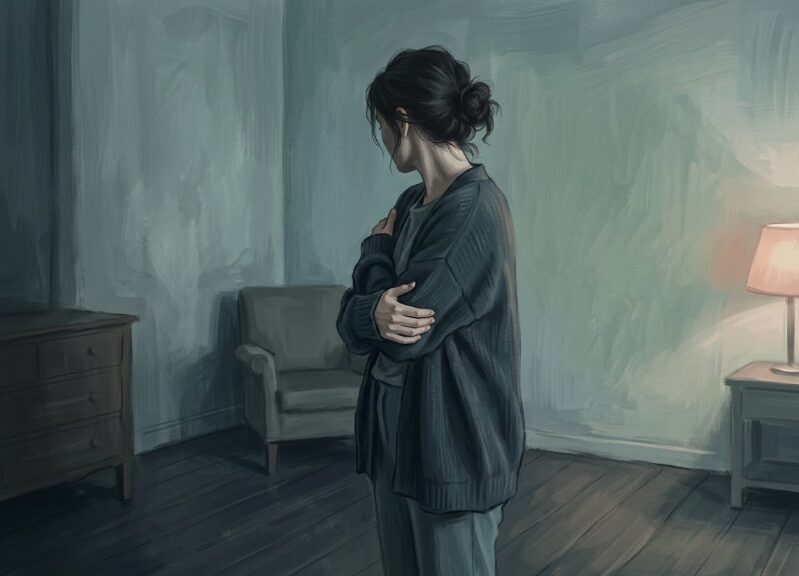
A studio apartment in Osaka. 2 a.m. As usual, Ryota (a pseudonym, 30) is awake.
Weekdays he runs himself ragged at a factory and gets home in the middle of the night. On days off, he attends expensive psychology lectures; the rest of the time, he sits in a corner of his room with his arms around his knees.
No friends. No partner. No hobbies.
What he has is the lopsided, ridged texture of his own skull, and the sudden flashbacks — what he calls “the replay of hell.”
He is looking for the reason for his life.
“Why was I born?” “Why was I the only one who had to keep being beaten?”
The answer sat in the blood-and-violence-soaked memory he had been trying to seal away.
Chapter 1: Violence as Daily Life
The home Ryota grew up in was a sealed room ruled by violence.
His biological father, a stepmother, an older sister, a younger sister, and Ryota — five people. His biological mother had run from the home when Ryota was four, leaving him behind.
The absolute monarch of the house was the father. Alcohol, gambling, irrational outbursts. The smallest pretext was enough to set him off, and his fists landed on whoever was closest.
Chapter 2: A Memory He Wishes He Could Forget
One afternoon, Ryota’s mother had a large backpack on, hurriedly packing.
Small Ryota understood immediately. “Mom is going somewhere.”
I’m going with her. I can get out of this hell. He hurried over to put on his own little backpack and ran toward her.
“Mom! I’m coming too!” “Take me with you! I’m going with you!”
His mother turned, pale, and pressed an index finger to her lips.
“Sshh. Be quiet.”
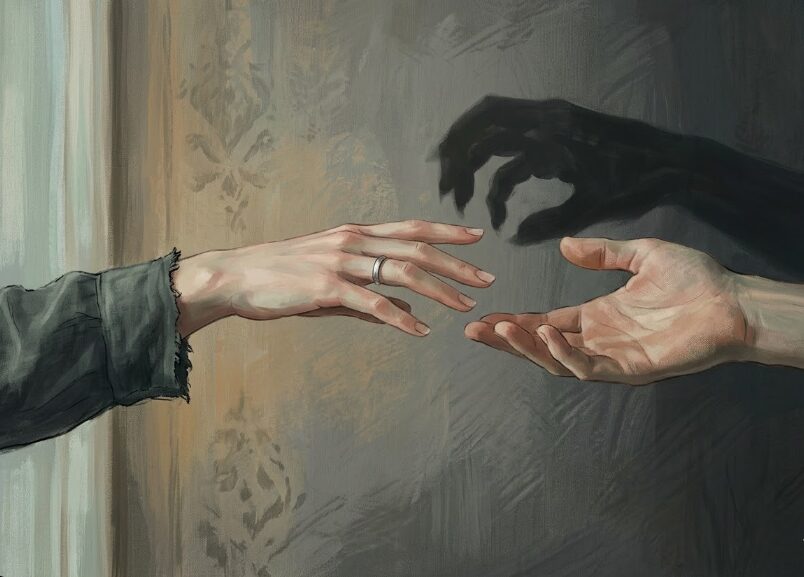
It was not the face of a mother concerned for her son. It was the face of a prisoner afraid the warden — the father — would catch the escape.
“You stay here.”
That was all she said, and she stepped through the front door without a sound.
His older sister was laughing at something on TV. The one-year-old sister was asleep in a crib. Only Ryota was left at the entrance.
The little backpack on his shoulders felt unbearably heavy. Inside it were his favorite toy and a change of clothes. Packed for going with her. But there was no longer anywhere to go with her.
And once she was gone, the father’s violence — denied its outlet — only intensified, and the focus narrowed onto small Ryota.
Chapter 3: The Scapegoat, Completed
When Ryota was six, his father remarried. A new “mother” — the stepmother — entered the house.
She approached him at first in a sweet voice. Within days she was showing what she actually was.
“He’s not friendly. Not cute.” “Has the same creepy eyes as the woman who ran off.”
The stepmother was also afraid of the father’s violence. So, to keep the sparks off herself, she made Ryota the lightning rod.
Whenever anything about Ryota displeased her — or even when nothing had happened — she reported it to the father.
“He mocked me.” “He won’t listen.”
The father, hearing it, would administer his punishment with relish. The stepmother would watch, smiling with relief: “Good — at least I’m not the one being hit.”
The older sister joined the structure. Quick on her feet, she had figured out how to ingratiate herself with the stepmother. To not be the target, hand someone else over.
One day the stepmother caught the older sister having scattered trash. The sister, instantly, said: “It was Ryota who did it.” And the stepmother, just as quickly, took it as truth.
Chapter 4: The Younger Sister as “Hope,” and Its Collapse
By the time Ryota started middle school, he had finally found, for the first time, “something to protect.”
His younger sister was pure, and she was attached to him. Only her voice calling him “big brother” was tying him to the house. The reason he could endure his father’s fists, the reason he could let the stepmother’s cold eyes slide off — all of it was that she existed.
But eventually, the father’s hands turned toward her too. Ryota threw himself in the way as a shield. Being hit himself was something he was used to. His father’s violence reaching her was the one thing he could not allow.
Once high school started, Ryota took on part-time work. He was saving the funds to leave home. Drowsy in class, beaten when he got home — he kept telling himself, “just a little more.”
The spring he turned eighteen, Ryota left. He could not take his sister with him. That stayed as the deepest wound of all.
Living alone, Ryota had, for the first time, “a safe place.” But the moment safety arrived, his body stopped working. Couldn’t get up in the morning. Tears that started for no reason and would not stop. Loud sounds that froze him in place. The memory of his father’s fists had been waiting — and inside the safe room, the lid finally came off.
The news that his sister had also left the house came shortly after. She had walked out under her own power. Ryota was relieved. And at the same time, the regret of “I couldn’t protect her” stayed with him for years.
Comments