From some point onward, every human being lives by suppressing their feelings. But “which feelings, and how deep” depends enormously on the home you grew up in.
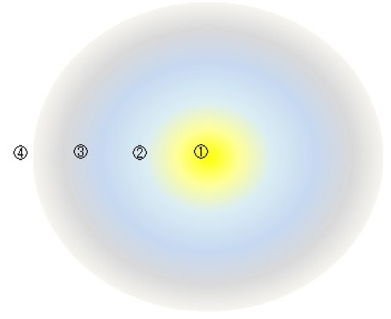
Across the four zones from the previous article — ① Western-style family, ② Japanese-style family, ③ toxic-parent family, ④ abusive family — both the depth of suppression and the content of what gets suppressed are completely different.
Every Human Is Born With the “Potential to Develop Healthily”
As long as there is no functional impairment in the brain, every human baby is born with “the potential for the heart to develop healthily.”
By “the heart developing healthily,” we mean a heart that can trust and care about both itself and other people. Left undisturbed, that potential unfolds in the child on its own.
People raised in Zone ① or ② got to express that potential. People raised in Zone ③ or ④ went through suppression so heavy that self-esteem could not develop properly.
Suppression in Zones ① and ② — Depth: Just Brushing Sand Over It
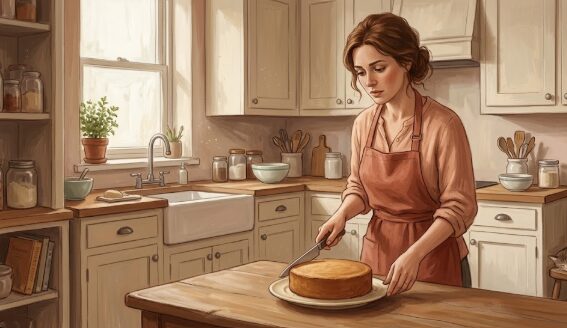
Everyone suppresses feelings. The everyday suppression in Zones ① and ② looks like this:
Wanting to sleep more, but getting up because you’d be late.
Wanting sushi, but going for an onigiri because money is tight this month.
Disliking a coworker, but keeping minimum contact because work is work.
Disagreeing with a scolding, but staying quiet so as not to escalate.
The defining feature of this kind of suppression is that it is temporary.
It is sand brushed lightly over the feeling — easy to clear away again.
Suppression in Zone ③ Toxic-Parent Families — Buried Past the Point of Easy Recovery
Suppression in Zone ③ is qualitatively different from ① and ②.
Wanting things you are never allowed to want, so you give them up.
Trying as hard as you can and never being acknowledged.
Wanting an apology, wanting to be thanked — and wondering if wanting that makes you small-minded.
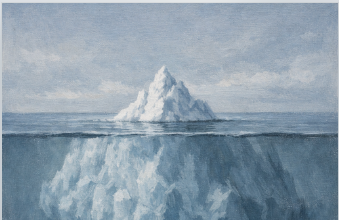
The denial in this environment is much heavier than what comes from a Zone ① or ② home, so the real feeling is buried deep underground. Not “sand on top” — buried far enough down that it cannot be dug back up easily.
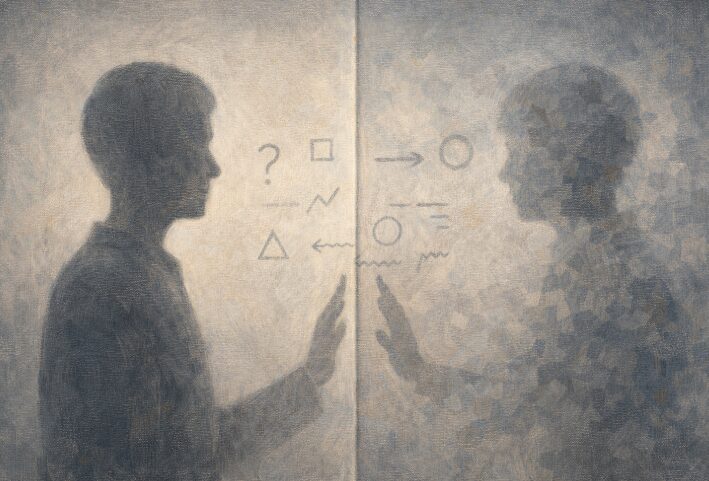
With little experience of being met with empathy, even when you do tell someone, you sense it won’t really land. So you tend not to tell anyone. Frustration and anger have nowhere to go.
That said, people raised in Zone ③ still have a small amount of self-esteem. Even in distorted form and even in small quantity, they did receive some parental love; experiences of being cared for by someone outside the family, or earlier periods when a parent’s love was more ordinary, allow self-esteem to grow accordingly.
Even a little self-esteem allows a person, when treated unfairly, to recognize “this is unjust” and feel anger. That is the major difference from Zone ④.
Suppression in Zone ④ Abusive Families — The Lid Closes, and It Locks
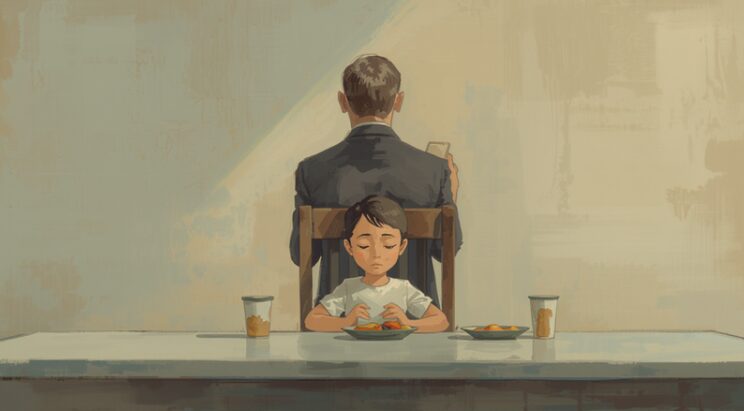
People raised in Zone ④ have grown up with almost no self-esteem at all — only the body has grown.
What they are suppressing is fear.
The fear of being abandoned, the fear of being killed, held down with enormous force. Telling anyone about this fear is itself frightening, so they do not, in the first place, talk about it.
To begin with, they don’t know that “your feelings can actually be received by another person” is even possible.
The fear gets pulled into a heavy box at the bottom of the heart; the lid slams shut and locks.
It happens unconsciously. They themselves don’t notice that they are suppressing fear at all.
Of all the feelings, fear is the most difficult.
The experience of being afraid is etched into the brain more deeply than any other. In a moment of fear, most people instinctively let it out — saying “that was scary,” even screaming it.
But people raised in Zone ④ don’t even register most things as unjust. The feeling of anger barely arises; what comes instead is something close to resignation, accepting it sadly and quietly.
The “depth” of suppression is not weakness, and it is not personality. The environment a person grew up in is what set “how deep their feelings get buried.” For someone raised in Zone ④, recovering access to their own emotions takes more than willpower — it takes a safe environment, time, and a relationship with someone they can trust.
Further reading
What Determines Self-Esteem? — Four Family Types Through the Metaphor of Air Quality


Comments