Some people who were abused as children once tried, by themselves, to ask for help — going to a counter, a police station, a city office, hoping that an adult would listen.
For a child, telling someone outside the family what happens at home takes enormous courage. They don’t know what their parent will do if it gets back to them. Carrying that fear, they still believe — “maybe this adult will help” — and force the words out in a shaking voice. Some agonized for days, even months, before they could speak.
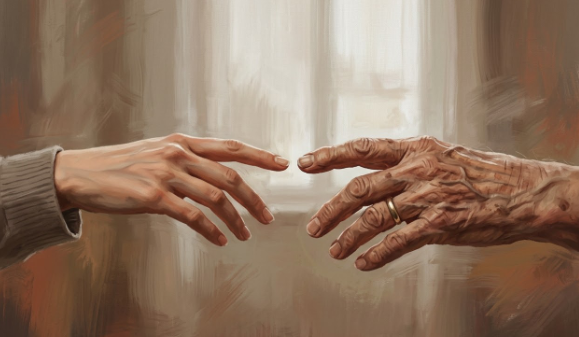
But sometimes the hand they trusted pushed them away. Sometimes they were told, “You’re the one who’s wrong,” and the words they had finally managed to say were erased, as if they had never been spoken. They had gone there for help, and they were sent home — as if they, not their parent, had been in the wrong. It happened in the past, and it is happening still — the shape keeps shifting, but the core stays the same.
This article gathers those cries — the voices that did not reach.
What Was Said to Them at Each Door
Children who reached out for help didn’t only turn to Child Guidance Centers (児童相談所, Japan’s primary child welfare agency). They went to the police, to schoolteachers, to school nurses, to municipal welfare counters, to relatives and adults they knew. The institutions are different. The eras are different. And what came back when they ran in, gathering their courage, has a strangely consistent shape. It wasn’t that one particular child was unlucky. From here, we look at the scene agency by agency.
At the Child Guidance Center
The Child Guidance Center is supposed to be the last line of defense — the agency meant to protect children from abuse. And yet, even when a child runs to its door, the door sometimes does not open. We begin with a story from decades ago, when society’s awareness of abuse was far thinner than it is now.
My father’s violence could begin at any moment. The instant his mood soured while watching TV, he would suddenly kick a chair toward me. If I cried, he hit me harder. So I learned to stand expressionless, even while being hit.
By the time I was in middle school, the violence had become daily. There were mornings I went to school after being hit in the kitchen.
I called the emergency police line, 110, many times. In a shaking voice I would say, “My father is hitting me.” The police came. But after exchanging a word or two with my father, they would turn to me and say, “Your dad’s tired. Don’t go making him angry.” Then they would leave, just like that. I went to the Child Guidance Center many times, too.
The case worker opened a file and explained, “He hasn’t really hurt you that badly, has he?” “And our temporary shelter is full — we can’t really make room for you.”
It went on like that until I finished high school. Later, this person wrote, “I kept being betrayed — by the police and by the Child Guidance Center alike.”
Visible bruises got you closer to being believed — that was how it felt. This isn’t a story from a distant past. Abuse that leaves no mark on the body has been hard to register as a “case” both then and now.
My mother ignored me, day after day. The night I had a nightmare and called for her, she turned her back to me. In front of all my relatives, she would belittle me — “There’s not a thing cute about this child.” Nothing I did was ever praised.
One day when I was eight, I couldn’t take it anymore. I went, alone, to the Child Guidance Center in my neighborhood. I had looked up the location ahead of time. I stood at the front desk, trembling, and said, “I don’t want to be at home.”
The worker looked into my face for a long time, thought for a while, and then said, “It’s because you aren’t cute that no one loves you. Be cuter, so your father will love you.”
She was still looking at my cheek as she said it again — “Be cuter.” Then she sent me home.
You might think: if someone notices and makes a report, surely this time they’ll act. But the next story is more recent. Even when someone reports, the Child Guidance Center cannot always move.
On days when my mother’s mood was bad, no food came out. Sometimes that went on for three days. I would get so hungry I’d try to find something in the kitchen, and my mother would shriek at me in a high voice. I was sent to school in thin clothes, even in winter.
A neighbor noticed and called the Child Guidance Center. The same neighbor told me I should go in person, so I did.
I told the worker what was happening. She took notes on a piece of paper, thought for a while, and said, “I’m sorry, but there are times when there’s nothing we can do, either.”
There was no malice in it. But it came across as: “We can’t help you.” That night, when I got home, there was no food again.
Being turned away once doesn’t always stop a child from coming back. If there is nowhere else to go, a child will walk back to the same counter — over and over. And every time, they are sent back.
You could never read my mother. On days I got a poor test score, she used that as a reason to press a lit cigarette against my arm. During long school breaks, there were stretches when I went days without enough food.
Starting in the upper grades of elementary school, I began going to the Child Guidance Center on my own. I had found the location myself. The first time I asked, “Can I go into a facility?” the worker said, “It’s not that simple.”
The answers I received over time were similar — “Talk it through with your father.” On the day I told them I hadn’t eaten for days, the worker looked me over and said, “You don’t seem to be losing weight.” Once a worker said, sounding tired, “When you come in this many times, the paperwork on our end gets to be a lot, you know.”
In the end, they always asked, “So — what do you want to do?” I was never told of anywhere else I could go. So I had no choice but to say, “I’ll go home.”
Every visit got back to my parents. The night I came home, I was blamed again. After a few times, I started saying to the worker, “It’s all right now.”
“It stayed at the level of guidance.” “We missed the moment to intervene.” “There was nothing we could do.” Phrases like these appear again and again in the Child Guidance Center’s own explanations.
At the Police
The police are supposed to step in when there is violence. If there are visible injuries, surely they’ll do something — many children believe that as they run in. But when the person who hurt them is a parent, that expectation can be betrayed.
My mother was angry. In her hand was a metal rod from a doorway curtain rack — its tip jagged and pointed. She thrust it toward my face. I dodged at the last second. But a sharp pain shot through the corner of my eye.
I ran out of the house and into the nearest police box (交番, a small neighborhood police station). The moment I said, “My mother did this to me,” the officer’s manner changed.
“When a parent does something to their child, the police can’t intervene — that’s a civil matter,” he said. If the injury wasn’t too serious, the parent could claim it was discipline, and the police couldn’t handle it.
I was taken to the police station. An officer who looked close to retirement studied my face and said, “You can’t be doing well at school, can you.”
Late at night my father came to pick me up. After we got home, he said only “Don’t make your mother angry,” and ordered me to bathe and go to bed.
Being hit is one thing. When life itself is at risk — surely then they’ll be protected. Even when that seemed certain, the ending sometimes didn’t change.
One night during middle school, my mother drove the car to a deserted harbor. With the engine still running, she said, “Let’s die together. I’m worn out trying to live with you.”
Before she could press the accelerator, I opened the door and jumped out. I had no shoes on. I ran barefoot to the nearest police box.
“My mother is going to kill me,” I said. I couldn’t stop shaking. They took me to the police station in a patrol car. But the police didn’t protect me.
After a while, my mother — the same one who had just said we should die together — came to pick me up. With her next to me, I was taken home, just like that. She smelled of alcohol, and she went on drinking after we got back.
Some kinds of harm take years to say out loud. Some children carry them, unspoken, for years. This is one of them.
My father sexually abused me nearly every night. Once he had checked that my mother was asleep, he would slip into my futon, cover my mouth, and touch me all over. If I made a sound, he threatened that my little brother in the next room would wake up.
One day my father was away on a business trip, and I thought — today is the only chance. I ran to the police. Shaking, I forced myself to explain.
The officer thought for a while and then said, “Listen. If we accept what you’re telling us, your father will lose his job. Your whole family won’t be able to make it. For your family’s sake, do you think you could endure this a little longer? If you can hold on, everyone can keep their peace.”
I was sent home. For years and years, those words wouldn’t leave my head.
Once you are protected, you are safe — at least, for now. But temporary protection is not the end. This is the story of a child who was protected and then sent home within days.
My father was obsessed with my grades. When I didn’t get the marks he wanted, he would yell for hours and sometimes hit me. The winter before my entrance exam, I talked back to him, and he turned a kitchen knife on me. I dodged, and got only a shallow cut.
A neighbor saw the blood and called it in. I was taken to a temporary shelter (一時保護所, a short-term protective facility run by the Child Guidance Center). In a windowless room, I spent days staring at the ceiling. Even to use the bathroom, I had to call a staff member, and I would wait a long time before they came.
The Child Guidance Center worker looked at the shallowness of the cut and said, “If he had really meant it, it wouldn’t have ended like this.” Then she added, “You have an important entrance exam coming up. You should go home and study.”
The police didn’t listen properly either. From the start they spoke as if they had already decided, and ended up raising their voice at me.
In a few days, I was sent home. The time at the shelter felt as if I were the one being punished. After I came back, my father’s attacks got even worse.
Whether a child ran in to the police, or was lectured afterwards with “Think about your family,” there is a shared experience. The words that came back have stopped many feet at the door, many times.
At School, with Teachers, in the Nurse’s Room
School is where a child spends the longest hours outside the home. It’s also where the adults nearest them — the ones who could notice — are gathered. And yet, those very adults sometimes fail to notice. Worse, they push the child further into a corner.
From the time I was in fifth grade, my father started coming into my futon at night. He pinned my hands and feet down, touched my chest, and said, “You’re growing up.” If I made a sound, he threatened that my little brother in the next room would wake up.
The lunch I brought to school was a single bag of cheap rice crackers. My mother didn’t have it in her to make me a real lunch.
During lunch break, my teacher saw it and said, in a voice loud enough for the whole classroom — “Hey, this isn’t snack time.” The classroom snickered.
The next day, the classroom became unbearable, and I started spending my days in the nurse’s room. The school nurse only ever asked me, “Are you hungry?” and gave me a small yogurt. Then she would say, “If you try a little harder, you’ll be able to come back to your classroom.”
About my father, I couldn’t tell anyone.
Maybe talking to a teacher will change something. With that belief, some children gather their courage. But when the teacher acts with no ill intent and reaches out to the parent, the result can be the opposite — the fire at home only burns hotter.
My father was obsessed with my education. Even when I got 100 on a test, he said, “Don’t get excited over a test that easy.” If I got 90, two or more hours of verbal abuse followed. He kicked my chair so I fell to the floor, and kicked me again where I lay.
In my third year of high school, one day, I couldn’t take the abuse anymore and went to my homeroom teacher.
The teacher was silent for a moment, then said, “I don’t really know what to do either. I guess I’ll have to talk to your father.”
By that evening, the teacher had reached out to my father. At home that night, the beating was worse than ever.
Even if one adult turns you away, there are still others. With that belief, some children go to one person after another, looking for someone who can help.
On nights when my mother was in a bad mood, I was made to kneel in the hallway. The floor was cold, and her cursing went on past midnight. “Because of you—” “If you weren’t here—” Trembling, I pressed my forehead to the floor in apology. The next day, at school, I behaved as if nothing had happened.
When I started high school, I worked up the courage to email a teacher I had been taking lessons from for years — an after-school class I’d attended since I was small. “Something is happening at home,” I wrote. “I’d like someone to hear it.”
No reply came. I waited a week. Two weeks. Nothing.
Next, I went to the advisor of the club I was in. The advisor listened for a while, then said, “You’re old enough to work. If you hate home that much, just leave.”
As a final attempt, I ran to the police. The officer’s answer was this: “Speaking badly about your parents — that isn’t right.”
Later, this person wrote, “All I could do was give up on a society where no one would help.”
Before a child even learns they cannot rely on anyone — sometimes, earlier, they are made to understand they don’t even have the right to ask. That happens when the adult who was supposed to protect them sides with the parent.
At home, no matter what I did, my parents shot it down. I was being bullied at school too, and my parents didn’t care.
One day, in middle school, there was a parent–teacher conference, with me there too. I had been hoping that the homeroom teacher, at least, might take my side.
But in front of my parents, the teacher said about me, “This child doesn’t really have anything she’s particularly good at.” My mother laughed and said, “That’s right — at home, she’s no help at all.” The teacher nodded along: “Right, I can imagine.”
For the whole meeting, the two of them sat on either side of me, counting up my shortcomings. The one who was supposed to protect me had sided with my parents.
After that, no matter what trouble I had at school, the thought of going to a teacher never crossed my mind again.
At the City Office, at the Welfare Counter
Being turned away at a counter is not only something that happens in childhood. As an adult — walking into a public office on your own — sometimes what comes back hasn’t changed at all. Even past childhood, the response at the counter stayed the same.
Even after I finished high school, I couldn’t escape my father. At night I couldn’t sleep — I was afraid of the sound of his footsteps. During the day, I couldn’t work.
One night when I was 19, I was walking unsteadily through the streets. It was raining. I couldn’t stay standing anymore, and I stepped into a police box. “Please help me,” I said. The officer looked at me and said, “What are you doing out here at this hour? Go to school.”
A few days later, I went to the city’s welfare counter (福祉課, the municipal welfare desk). When I said, “I can’t work,” the worker’s face hardened and she scolded me — “Why aren’t you working? You’re young.”
She didn’t ask for the specific circumstances. She handed me a flyer for a job placement office far from where I lived, and sent me home.
With Family, Relatives, the Adults Closest at Hand
These are not institutions, but family members, relatives, and adults close at hand can also be the place a child turns to.
When the public counter fails, surely the adult right next door — that’s what you want to believe. The relatives closest by are in the best position to notice that something is wrong with a child. But that closeness doesn’t always lead to help.
Perhaps the other parent will notice, and step in. Sometimes the adult a child finally tells is the other parent themselves. But what came back was something else entirely.
In her twenties, one woman finally worked up the courage to tell her mother something she had never been able to say.
“When I was in elementary school, at night, Dad would come into my room. He touched me, and told me not to tell anyone. Did you really not notice anything?”
Her mother did not stop washing the dishes. After a short silence she said, “You’re thinking too much. There’s no way he would do something like that!”
Then, as though nothing had happened, she changed the subject.
It had taken years to bring herself to say it. The whole confession was erased with a single sentence.
If a parent fails you, perhaps your grandparents will take you in. Blood relatives will surely shelter you. With that hope, some children fled to their grandparents’. But even there, the time they were allowed to stay had its limits.
In middle school, while my father’s violence continued, I went to stay with my grandparents. My father’s mother, at first, welcomed me kindly.
But after about a week, my grandparents’ attitude changed. “How long do you plan to be here?” “Your parents have their reasons too.”
Eventually my grandfather said, “You’re the one who walked out on your parents. From here on, live on your own.”
When I told them I had no home to go back to, they didn’t budge. I packed my things and was pushed out the door.
When the danger is to your life, the only place you can run to in that moment is a nearby relative’s house. But sometimes, even in the middle of the night when you get there, the door doesn’t open. Because the person you went to for help has chosen the parent’s side.
My parents turned a knife on me many times. On nights my father came home drunk, on nights my mother was beaten by him, for some reason the blade was turned on me. “Because of you—” “If you weren’t here—” my father would shout, taking a knife from the kitchen.
Terrified, I ran to a relative’s house in the middle of the night. I rang my aunt’s doorbell. She looked at my face and stood there in silence for a while.
Then she said, “Don’t bring shame on your parents.”
The door closed. I had no choice but to go home.
When there is nowhere left to turn, the only one left is the parent themselves. There are children, given no place at home or at school, who have worked up the courage to say it straight to a parent. But what came back was a brief, hollow acknowledgment — and that was the end of it.
After I started middle school, there came a stretch when no one in class would speak to me. Behind my back they called me “Germ.” At home, when I spoke to my mother she would nod without meeting my eyes. I didn’t feel I had a place — not at school, not at home.
One evening, at dinner, I made myself tell them. That no one at school spoke to me. That at home too, I felt I had been written out of existence.
Without stopping her chopsticks, my mother said, “Everyone goes through a phase like that.”
My father didn’t lift his face from his phone. The conversation drifted away, and ended.
I got up from the table without a word. After that, at home or anywhere else, I stopped saying what I really felt.
When the adult who should have noticed decides not to notice — that scene repeats, again and again, around an abusive home.
One morning in sixth grade, my mother hit me with a laundry pole, and red-purple bruises came up on my arms and across my neck. Even long sleeves couldn’t hide them.
That day, a delivery driver came to the door. He noticed my arm and stopped. “…Is that — are you all right?” he asked, lowering his voice.
My mother came out from the back, pulled my shoulder behind hers, and said with a smile, “She’s a clumsy one — falls all the time. Sorry about that.” Then she closed the door.
The driver didn’t press it, and left. Someone had noticed me. Still, nothing changed.
If I said it hurt, it would only get worse. So before long, I couldn’t even say “it hurts.”
What Comes Next — Why These Voices Did Not Reach
These are not isolated misfortunes. Across different eras and different doors, at the windows children ran to, the same scene has played out again and again.
So — why does the same thing keep happening? The mechanism behind these voices not reaching — we will untangle it from the perspective of survivors themselves.
Continued in Part 2, “Why These Voices Did Not Reach.”
[SWELL blog card placeholder: Part 2 — “Why These Voices Did Not Reach”]



Comments