You may have heard the phrase “abuse cycles.”
This article argues the phrase is not accurate.
What gets lumped together as “the cycle” actually contains several distinct structures with very different inner workings.
Knowing precisely what is repeating matters — for the direction of support, and for the survivor trying to make sense of their own situation. This article walks through four cross-generational patterns and lays out how they differ.
Chapter 1: Four Patterns Hidden Inside What Looks Like “Repetition”
When abuse runs across generations, the structure can be sorted broadly into four patterns. Each one has a different “core” of repetition, a different experience for the child, and a different direction of needed support.
Pattern A: Grandmother (mild intellectual disability or borderline intelligence) → Daughter (abuse history) → Grandchild (second generation of abuse).
Pattern B: Grandmother (abuse history) → Daughter (second generation of abuse) → Grandchild (third generation of abuse).
Pattern C: Grandmother (mild intellectual disability or borderline intelligence) → Daughter (intellectual trait + abuse history; combined) → Grandchild (abuse history).
Pattern D: Grandmother (mild intellectual disability or borderline intelligence) → Daughter (abuse history; typical intelligence) → Grandchild (mild intellectual disability or borderline intelligence — skip-generation inheritance).
| Grandmother | Daughter | Grandchild | Daughter’s defining trait | |
|---|---|---|---|---|
| A | Mild ID / borderline intelligence | Abuse history (typical intelligence) | Abuse history (typical intelligence) | Parenting bound by fear (endurance, emotional suppression) |
| B | Abuse history (typical intelligence) | Abuse history (typical intelligence) | Abuse history (typical intelligence) | Emotional suppression transmitted across generations |
| C | Mild ID / borderline intelligence | Cognitive trait + abuse history (combined) | Abuse history (typical intelligence) | The cognitive trait is what is most visible |
| D | Mild ID / borderline intelligence | Abuse history (typical intelligence) | Mild ID / borderline intelligence (skip-generation inheritance) | Heavy self-blame; tends to isolate |
Chapter 2: Pattern A — A Line Beginning From an Intellectually Disabled Grandmother
| ① Grandmother (intellectual disability) | ⇒ Hurts the child without realizing it |
| ② Daughter (typical intelligence; abuse history) | ⇒ Fears the cycle, parents desperately |
| ③ Grandchild (second generation of abuse) | ⇒ Grows up watching the mother endure |
If the grandmother sits in the mild intellectual disability or borderline intelligence range, she has likely been delivering psychological neglect and emotional damage to her child without ever recognizing it as “abuse.” No inner conflict, no guilt — for her, that was simply “normal.”
The daughter raised under her grows up as someone with an abuse history. The wound runs deep, and there is real fear around the act of reaching for love at all. But because she has typical intelligence, she also carries the vow “I will never be like that parent.” She is afraid of the cycle and works hard to hold it down.
The grandchild, growing up under this daughter, picks up that the mother (Daughter ②) is straining hard. They settle on a quiet adaptation: “Mom looks worn out, so I’ll hold mine in.” Touching as that adaptation is, it is also training in suppressing one’s own emotion.
Chapter 3: Pattern B — Abuse Experience Carrying Across Generations
| ① Grandmother (typical intelligence; abuse history) | ⇒ Parenting bound by fear; impact on the daughter depends on degree of recovery |
| ② Daughter (typical intelligence; second generation of abuse) | ⇒ Mirrors the grandmother’s endurance; impact on the grandchild depends on degree of recovery |
| ③ Grandchild (third generation of abuse) | ⇒ Mirrors the daughter’s endurance (less intense); becomes aware of the grandmother’s abnormality |
If the grandmother has an abuse history but typical intelligence, a different line begins from Pattern A.
The grandmother parented while still bound by her own fear. There may have been love for the daughter, but she hurt the daughter all the same — freezing when the child reached for closeness, or reacting too strongly to emotional outbursts. How deeply that affected the daughter depends on how much the grandmother herself had recovered.
The grandchild born to that daughter grows up with their own abuse history. If the grandmother and grandchild are under the same roof on a daily basis, the grandchild receives inappropriate behavior not only from the mother (Daughter ②) but from the grandmother as well.
Chapter 4: Pattern C — When Cognitive Limits Combine With Abuse
| ① Grandmother (intellectual disability) | ⇒ Hurts the child without realizing it |
| ② Daughter (intellectual disability + abuse history) | ⇒ Parents under doubled difficulty |
| ③ Grandchild (typical intelligence; abuse history) | ⇒ Hurt from both directions: by ① and by ② |
Pattern C is the most layered — and the one in which the grandchild is most heavily wounded.
If the grandmother is in the mild intellectual disability or borderline intelligence range, the daughter may also be born with a similar cognitive profile. Heritability of intelligence is high, and mild intellectual disability is passed to the child with non-trivial probability.
In that case, the daughter is at once “a person with an abuse history” and “a person with mild intellectual disability or borderline intelligence.” Both apply at the same time.
In most cases, what is most visible is the cognitive trait. When the cognitive trait is what comes forward, the recognition of “I am abusing” is itself thin, and inner conflict is rare.
When abuse of the grandchild surfaces, the daughter says to support workers, “I was hit too as a child.” From the worker’s perspective, the daughter looks like a survivor stuck in a cycle. But the more decisive driver is the cognitive trait running underneath.
The grandchild, born of this daughter, grows up with their own abuse history. If the grandmother and grandchild share a home, the grandchild receives inappropriate care not only from the mother but from the grandmother — both of whom carry mild intellectual disability or borderline intelligence. The grandchild lives inside a structure where two family members with cognitive limits are simultaneously inflicting harm. With two sources of injury, the grandchild’s recovery becomes harder.
Chapter 5: Pattern D — Skip-Generation Inheritance, and the Doubled Suffering of the Daughter
| ① Grandmother (intellectual disability) | ⇒ Hurts the child without realizing it |
| ② Daughter (typical intelligence; abuse history) | ⇒ Has worked to break the cycle |
| ③ Grandchild (intellectual disability — skip-generation inheritance) | ⇒ Daughter blames herself, but the cause is genetic |
Pattern D is one of the loneliest forms of suffering for the daughter who has an abuse history.
If the grandmother has mild intellectual disability or borderline intelligence, the genetic trait does not always travel directly down the next line. It can skip a generation and reappear in the grandchild — skip-generation inheritance.
What rises up first inside the daughter is “did my parenting cause this?” The daughter, carrying her own abuse history, has lived for years with the fear of hurting her child. That fear flows directly into the conclusion “of course it’s my fault.”
In reality, the grandchild’s trait is not caused by the daughter’s parenting. A cognitive trait inherited from the grandmother is a separate cause, independent of how the daughter raised the child.
What twists the knife is the grandmother. Unaware of her own cognitive trait, the grandmother may say to the daughter, “It’s your parenting that caused this.” The grandmother lacks the capacity to feel the weight of those words. The daughter receives them anyway.
And as the grandchild grows older and starts displaying behavior that overlaps with the grandmother, the daughter knows exactly what it means. The pain of those moments — when the grandchild and the grandmother briefly look the same — sits beyond words.
Support workers can read the daughter in this pattern as “a mother whose parenting isn’t going well.” The reality is the opposite: she is alone inside a structure she did not choose, holding on as best she can.
Chapter 6: When the Choice of Spouse Adds Another Layer
One more factor can be layered onto any of the above patterns. People with an abuse history sometimes choose, as a spouse, someone with intellectual disability or borderline intelligence.
This is not a conscious choice. People with an abuse history don’t have “an ordinary parent–child relationship” as lived experience, and so their internal sense of “ordinary” in human relationships is shifted. The other person’s cognitive trait can register as “unremarkable” to them. Or the warmth and uncomplicated goodwill that some people in the borderline-intelligence range carry can feel like safety.
But once that pairing forms, both parents carry genes for cognitive weakness. Cognitive traits are polygenic, and when both parents share similar profiles, the probability of the trait reaching the child or grandchild rises further.
This is not, again, a story about anyone’s “ill intent” or “irresponsibility.” It is about how the experience of abuse alters someone’s internal sense of relationships, which in turn complicates the structure the next generation grows up inside.
Chapter 7: Why the Four Patterns Look Like “the Same Cycle” — and Why Distinguishing Them Matters
Why do these four very different structures get bundled under the single phrase “abuse cycles”?
Part of the answer is that all four share the same outcome — the child is hurt. From the child’s side, whether the parent had intellectual limits or an abuse history, the experience of “my feelings did not get received” stacks up in the same way.
Lumping the four together under one word brings two harms. The first is that an unfair brand — “you might pass this on” — gets stamped onto people who have an abuse history. The second is that support workers misread the situation and aim their interventions in the wrong direction.
The daughter in Pattern D especially: without an accurate read, she gets treated as “a mother who failed at parenting.” If the worker can hold the view that the grandchild’s trait is a product of skip-generation inheritance, the support given to that daughter changes at the root.
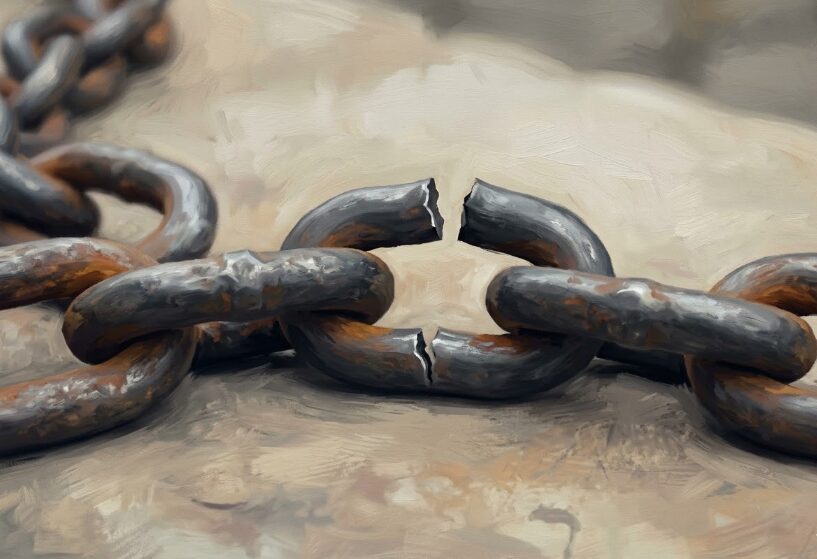
Stop closing the conversation with the single word “cycle.” Look at each family’s structure carefully, one by one. That is the first step toward the support that is actually needed.


Comments