What “Your Mother Was Also a Victim” Has Held Back
When child abuse is discussed, the perpetrator named first is, naturally, the one who directly inflicted harm. When the biological father is the perpetrator, the mother’s name—if it appears at all—tends to be filed under “the one who couldn’t stop it” or “she was a victim of domestic violence too.”
Those framings can, at certain points, be necessary even for the survivor. For a child, facing the idea “my mother was an abuser too” head-on means walking straight into acute pain.
Telling oneself “Mom had it hard too” is a form of self-protection, and there are phases when that protection is needed.
But when those words stay lodged in the mind for good, they become shackles the moment one tries to face the past.
Just as long-buried complex feelings toward the mother start to surface, they collide with society’s sympathy for mothers (“it’s cruel to blame her”), and the survivor is driven back into silence. The phrase turns into a quiet obstruction.
The Seven Types of Mothers Who Don’t Protect
“The mother who won’t help,” “the mother who won’t shield”—even named in a single phrase, the form takes more than one shape. Listening to survivor accounts, seven recurring types come into view. They are distinct from “the mother who lays hands directly,” a pattern already recognized by society as abuse. What this article is about are the seven types that have lived in its shadow. Each is taken up in turn.
① The Mother Who Doesn’t Stop the Father’s Violence
The father is hitting the child, and the mother is right there. But she does nothing. She doesn’t speak up. She doesn’t intervene. She doesn’t call the police. This category includes harm by an older brother, an uncle, a grandfather, or the mother’s male partner—not just the father. The mother herself is often under psychological control as well, and her ability to act is, in fact, structurally limited. Even so, from the child’s side, the fact that the mother was there and did not move stays in memory for years.
A scene of the mother standing silent while the father is hitting the child:
Another evening at dinner, the moment my father saw the dish I had brought to the table, he shouted, “I can’t eat this,” and threw the plate to the floor. My mother stayed at the kitchen counter and didn’t turn around. The sound of running water didn’t stop. While I was crying and apologizing, she kept washing the dishes. Clearing the table later, she only said, while wiping it down, “Just hurry up and eat.”
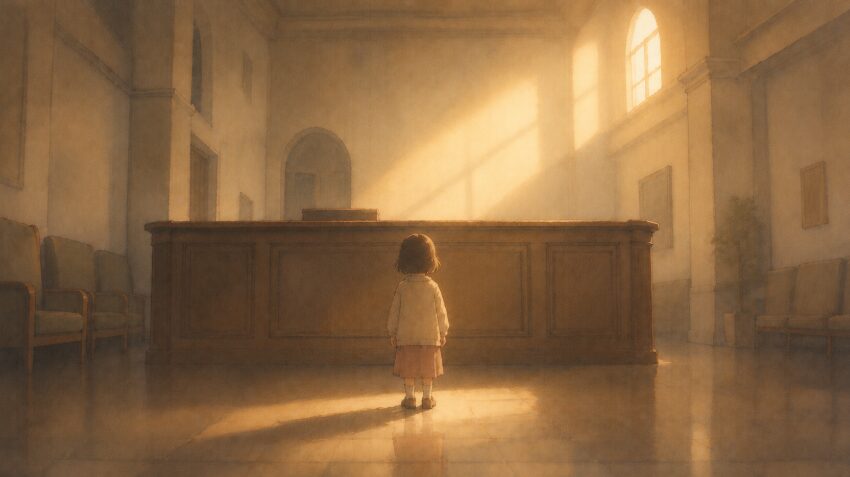
What runs through this type is the feeling: “physically here, but absent.” Under the same roof, the sounds of violence and the moans clearly audible—and yet she does nothing. That contradiction stays with the child longer than the violence itself. “What hurt more than being hit was that my mother didn’t help me.” Many survivors say something like that.
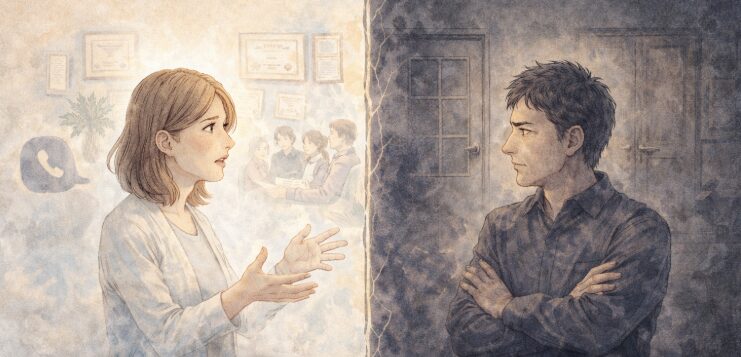
Even after learning that the mother herself was under coercive control, the unease does not go away. Years of trying to understand the mother’s circumstances alternate, again and again, with years of surging anger. One can fall into a cycle of self-blame: “Am I just a cold person for holding this anger?” But understanding the mother’s circumstances and acknowledging the wound one received are two separate tasks. They are not a choice where picking one erases the other.

Comments